Hydrolyzed Collagen Peptides
Collagen gets broken down into di- and tripeptides, prolyl-hydroxyproline being the one doing the real work, and they get absorbed intact instead of getting wasted as generic protein. Then they pull double duty. First, they hand your skin the amino-acid building blocks for making more collagen. Second, the bioactive peptides seem to signal your fibroblasts directly, telling them to ramp up collagen and hyaluronic-acid production, while also boosting natural-moisturizing-factor content in your outer skin layer. Building blocks and a signal boost. That's hot.
Evidence
Moderate, and there's real weight behind it. Multiple randomized, placebo-controlled trials and pooled meta-analyses, one covering 26 RCTs and roughly 1,700 people, show statistically significant gains in skin hydration and elasticity over 8 to 12 weeks. So why not strong? Most of these trials are short, industry-funded, built on proprietary blends, and don't even measure the same outcomes from study to study. The signal is real. The paper trail is messy.
Interactions
No clinically significant drug interactions are established. It contributes a modest amount of protein and, in flavored powders, sometimes added sugar, which is worth noting for anyone tracking either.
Cautions
Generally very well tolerated; mild fullness or a feeling of heaviness is the main complaint. Products are animal-derived (bovine, porcine, marine) and are not vegan; marine collagen can trigger fish or shellfish allergies. Sourcing and heavy-metal purity vary between brands, so third-party testing is worth looking for.
Food sources
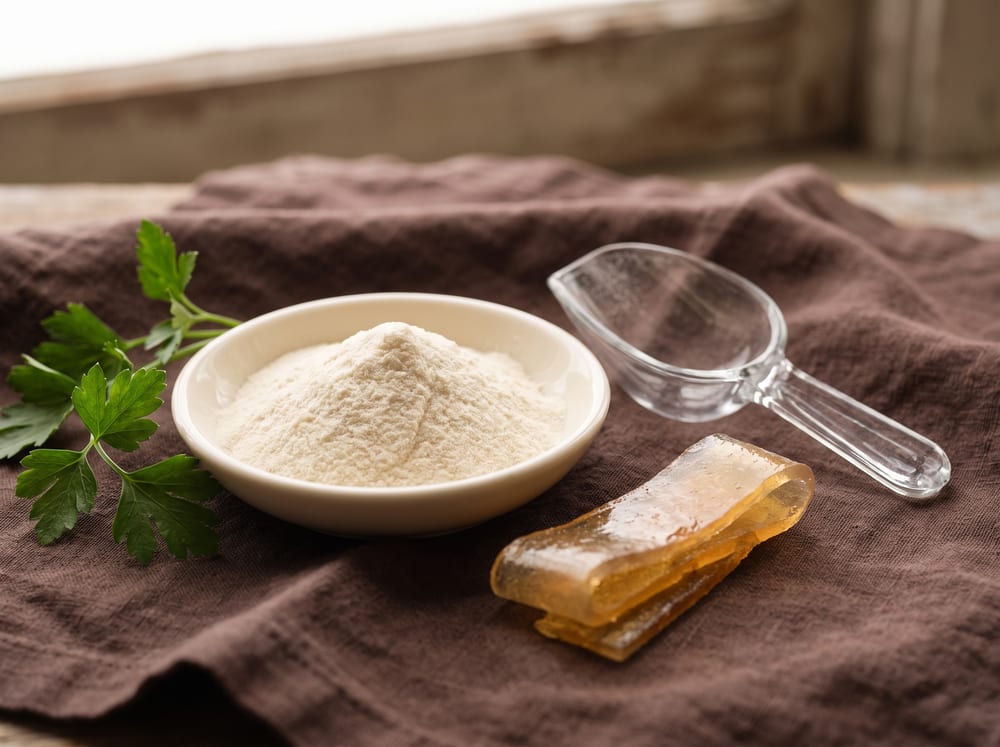
The body builds its own collagen from any complete-protein diet plus vitamin C; bone broth, slow-cooked cuts with skin and connective tissue, and gelatin provide collagen-derived peptides, though in less standardized amounts than a measured supplement.