Calcium (Calcium Carbonate / Citrate)
Calcium runs nerve signaling, muscle contraction, and neurotransmitter release, not just bone density, and its metabolism rises and falls right along with your estrogen. The leading theory: subtle shifts in calcium and vitamin D status during the luteal phase help drive PMS mood and physical symptoms, and topping up calcium smooths that swing back out.
Evidence
Moderate, and here's the number behind it. Randomized trials, including a well-cited multi-center study running about 1,200 mg a day of calcium carbonate, show meaningful drops in overall PMS symptoms (mood swings, bloating, cramping) versus placebo. The evidence for symptom relief is more consistent than the evidence for any single mechanism behind it, proof the effect is real even while the why stays fuzzy. Trials are still modest in number. Consider that the asterisk.
Interactions
Calcium reduces absorption of levothyroxine, tetracycline and fluoroquinolone antibiotics, bisphosphonates, and iron; separate by 2-4 hours. Thiazide diuretics plus calcium can raise blood calcium. High-dose calcium may interact with certain heart medications; coordinate with a clinician.
Cautions
Keep total intake at or below the adult upper limit of about 2,000-2,500 mg/day; chronic excess can cause kidney stones and constipation, and some analyses have debated a possible cardiovascular signal from high-dose supplements. Food-first is preferred. Avoid supplemental loading in those with hypercalcemia or certain kidney conditions. Educational information for discussion with a clinician, not a prescription.
Food sources
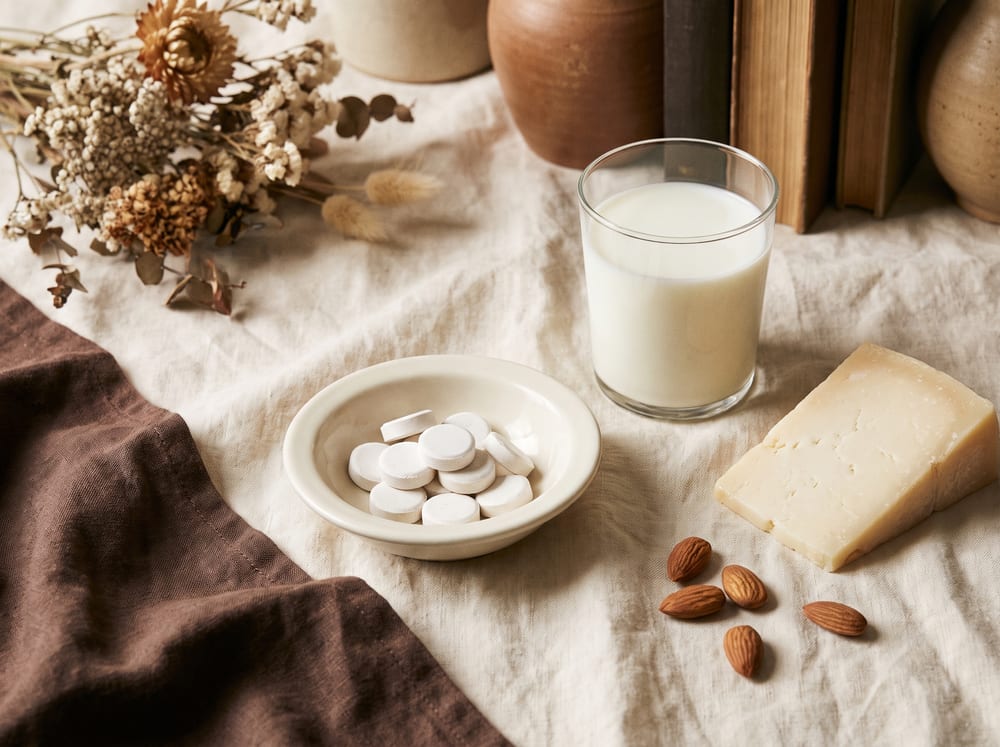
Think dairy (milk, yogurt, cheese), fortified plant milks, canned sardines and salmon with bones, tofu set with calcium, almonds, and leafy greens like kale and bok choy.