Cramp Bark (Viburnum opulus)
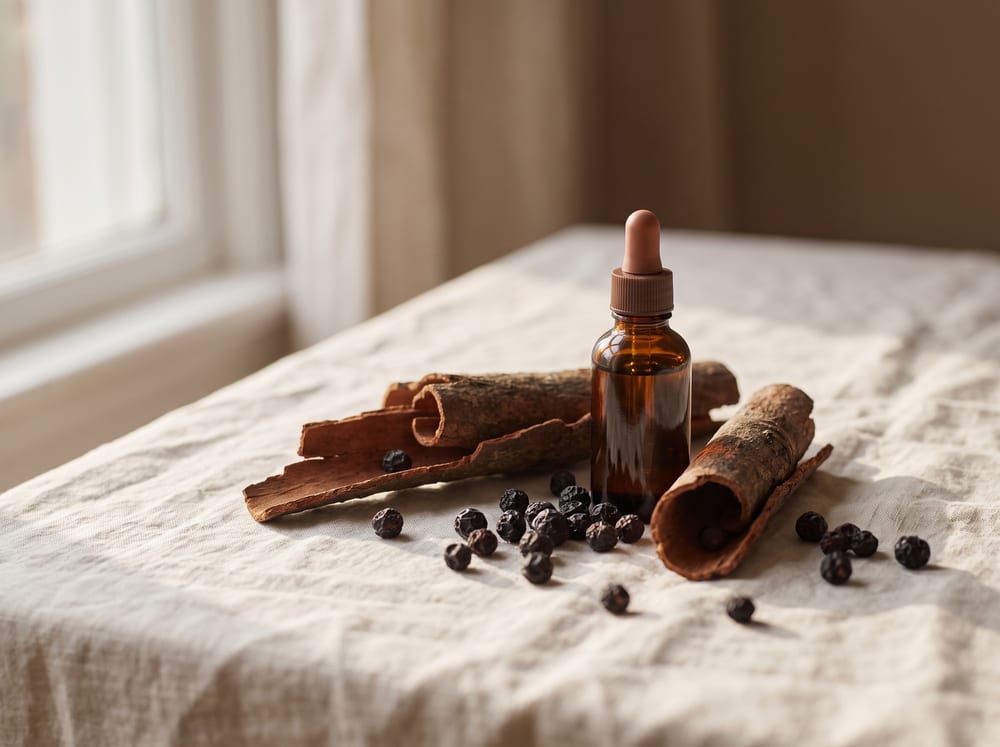
Cramp bark's own bark contains compounds, scopoletin among them, thought to relax uterine and general smooth muscle. That relaxation is the entire rationale behind centuries of folk use against menstrual cramping, dysmenorrhea in clinical terms, and spasm generally. The name is not subtle. Neither is the theory.
Evidence
Emerging, and mostly still in the lab, not yet in large human trials. Antispasmodic activity shows up in laboratory and animal models, and the traditional-use history runs long and deep. What's missing is the rigorous randomized human trial for menstrual pain specifically, because right now, it basically doesn't exist. So call this plausible and traditional. Don't call it clinically settled.
Interactions
Because it may relax smooth muscle and has traditional use touching blood pressure, use caution alongside antihypertensives and other smooth-muscle-active drugs. It contains tannins that can reduce absorption of some medications and minerals if taken together. Human interaction data are sparse; consult a clinician.
Cautions
Avoid in pregnancy given its uterine-active reputation and the lack of safety data, and use caution while breastfeeding. It is easily confused with the toxic-berried Viburnum species, so source carefully. Because human safety and efficacy evidence is limited, treat it as experimental. Educational information for discussion with a clinician, not a prescription.
Food sources
None in the usual dietary sense; the medicinal part is the bark, and the raw berries of related Viburnum species can be toxic and should not be eaten casually.