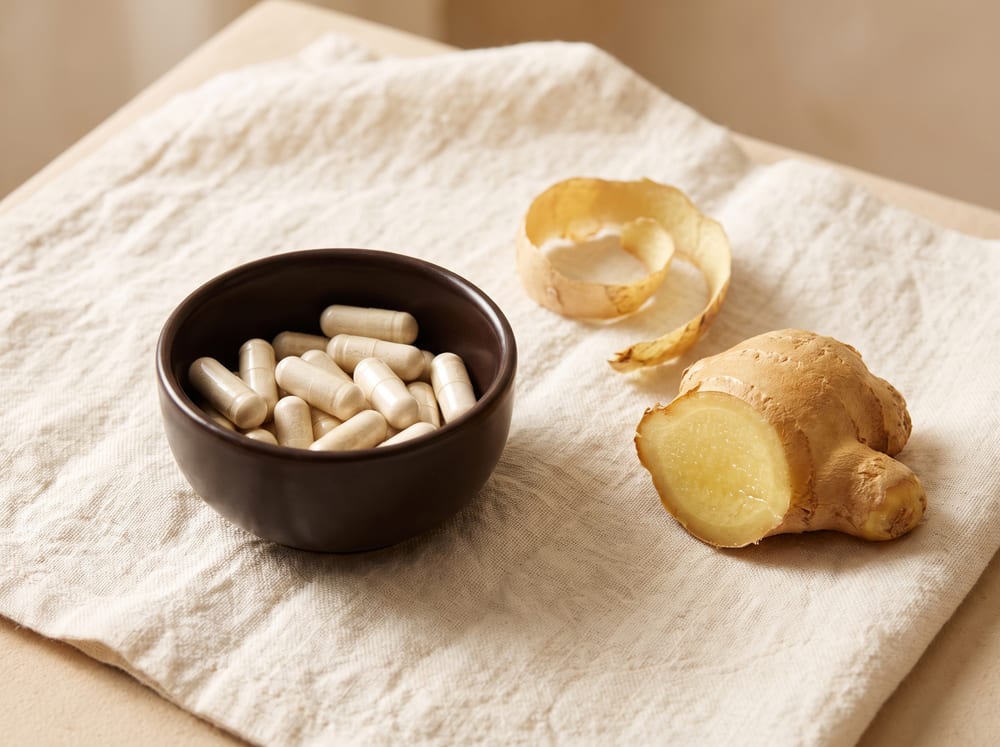
Ginger Extract
Gingerols and shogaols are the active compounds in Zingiber officinale, and they don't stall. They speed up gastric emptying and get antral motility moving, while working on serotonin 5-HT3 and other receptors that control the nausea and vomiting reflex. That's how a stalled meal gets moving again and a queasy stomach settles down.
Evidence
Moderate evidence, and it's consistent where it counts. Randomized trials back ginger for nausea, pregnancy-related nausea included, plus some post-operative and chemotherapy nausea, and for functional dyspepsia. Where it gets thin: broader digestive complaints beyond that list. Ginger earned its reputation on nausea specifically, not on fixing everything happening in your gut.
Interactions
At high doses may have mild antiplatelet effects and could add to the action of anticoagulant or antiplatelet drugs; theoretical additive effects with blood-glucose and blood-pressure medications warrant monitoring.
Cautions
Keep to food-level amounts in pregnancy and confirm with a clinician; higher concentrated doses are not well studied in pregnancy. May cause mild heartburn or reflux. Pause before surgery if using high doses. Discuss with a clinician before use.
Food sources
Fresh and dried ginger root, ginger tea, and crystallized ginger provide the same active compounds in variable, non-standardized amounts.