Curcumin (Curcuma longa)
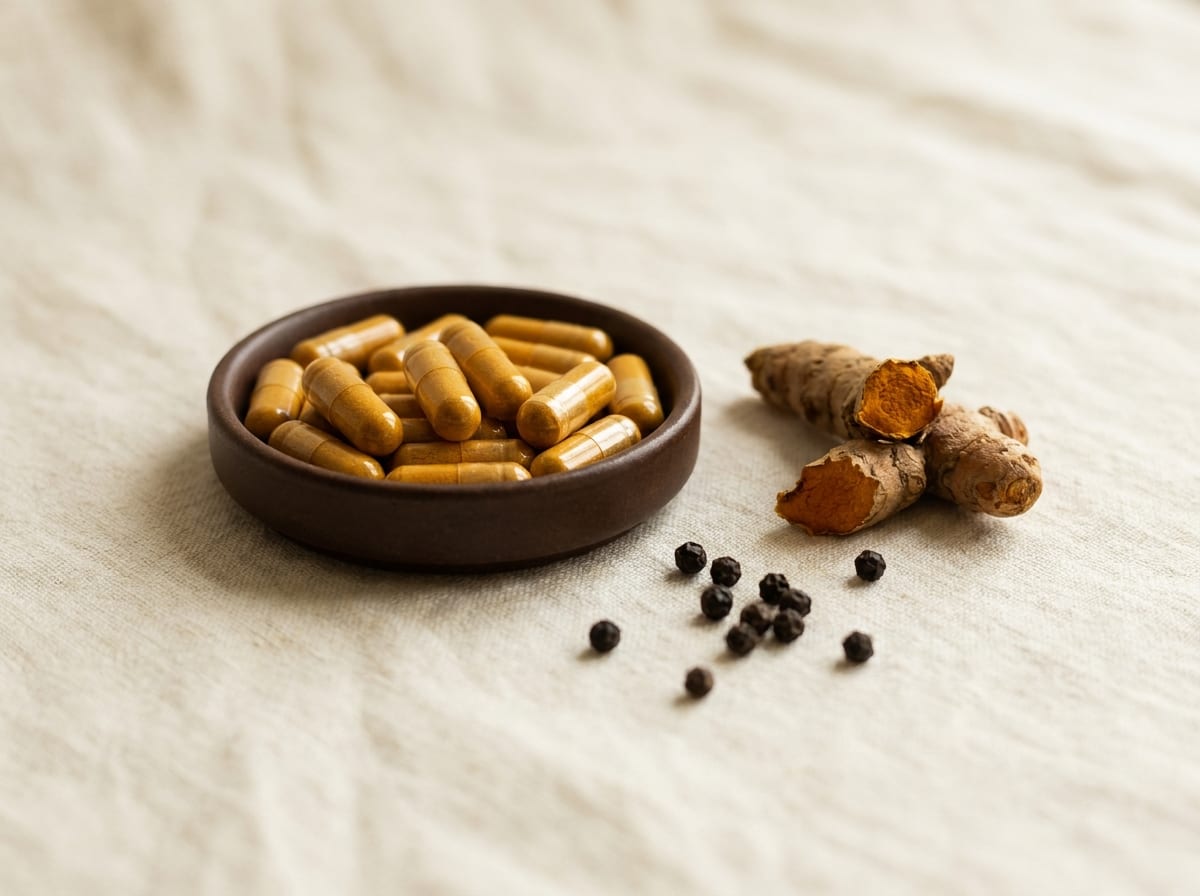
Curcumin is the yellow curcuminoid that makes up just a few percent of turmeric root by weight, and it goes straight for NF-kB signaling, the master switch that flips on a huge share of your inflammatory response. It also downregulates COX-2 and the cytokines riding downstream of it: TNF-alpha, IL-1beta, and IL-6. The mechanism was never the problem. Absorption is. Curcumin is fat soluble and poorly taken up from the gut to begin with, and the liver conjugates away what little gets in almost as fast as it arrives. Plain powder leaves you with plasma levels that barely register. Black pepper's piperine slows that liver conjugation and raises levels substantially, which is exactly why phytosome, nanoparticle, and micellar formulations exist. Same molecule. Better delivery.
Evidence
Moderate, and here's the shape of it. Several meta-analyses of randomized trials in knee osteoarthritis find real pain and function improvements, in some comparisons holding its own against an NSAID. That's not nothing. Meta-analyses of inflammatory markers back it up further, with reductions in CRP, IL-6, and TNF-alpha. Used alongside mesalamine in ulcerative colitis, there are positive trials on record too. So why not strong? The literature itself is the limit: most trials are small, short, and don't even agree on which formulation they're testing, and a real chunk of them are funded by the companies selling the extract. Plain, unenhanced curcumin, the stuff without piperine or a fancy delivery system, generally shows less. Read the label before you believe the study.
Interactions
Mild antiplatelet activity that can add to anticoagulant and antiplatelet drugs. Inhibits several CYP enzymes and P-glycoprotein, which can raise the levels of drugs cleared by those routes; piperine-enhanced forms do this more. May lower blood glucose, so watch for additive effects with diabetes medication. Chelates iron and can reduce iron absorption, which matters if your iron stores are already low.
Cautions
Liver injury has been reported with concentrated supplements, more often with the absorption-enhanced formulations, and appears linked to the HLA-B*35:01 genotype in some cases. Stop and seek advice for dark urine, pale stools, itching or yellowing of the skin. Avoid with gallstones or bile duct obstruction, since curcumin stimulates gallbladder contraction. Can cause reflux and loose stools. Pause before surgery. Culinary turmeric is fine in pregnancy; supplemental doses are not established. Discuss with a clinician before use, particularly on any of the drugs above.
Food sources
Turmeric root, fresh or dried, carries curcuminoids at roughly two to five percent by weight, so a teaspoon of powder delivers a small fraction of a trial dose. Cooking it in fat with black pepper is the culinary version of what the supplement formulations are doing.