Caffeine + L-Theanine
Caffeine blocks your adenosine receptors, the ones telling your brain to slow down, and cranks up arousal and firing rate. L-theanine, an amino acid built like glutamate, crosses the blood-brain barrier and turns up alpha-band EEG activity, the calm-but-awake brainwave. Together, theanine takes the jitters and the anxious edge off caffeine without touching the alertness. You get the lift. The shake stays home. The payoff: your arousal-attention curve shifts toward accuracy on the hard stuff, not just raw speed.
Evidence
Multiple small, acute, double-blind, placebo-controlled RCTs, plus a meta-analysis backing them up, show the combo beats either compound solo on sustained attention, task-switching accuracy, and how alert you feel. That's real, and it's measured. What it's not is proof of a long-term payoff. This is same-day data, single-dose data. The long-term picture is still unwritten.
Interactions
Caffeine adds to other stimulants (ephedrine, ADHD medications, decongestants) raising blood pressure/heart rate; it interacts with CYP1A2 inhibitors (fluvoxamine, ciprofloxacin) and can worsen anxiety or interact with lithium and clozapine. Caffeine is NOT a meaningful bleeding risk, but high intake can reduce iron/calcium absorption.
Cautions
Avoid or minimize in uncontrolled hypertension, arrhythmia, pregnancy (limit total caffeine), and anxiety/panic disorders. L-theanine may mildly lower blood pressure. Tolerance to caffeine's cognitive effects develops with daily use; withdrawal headaches are common.
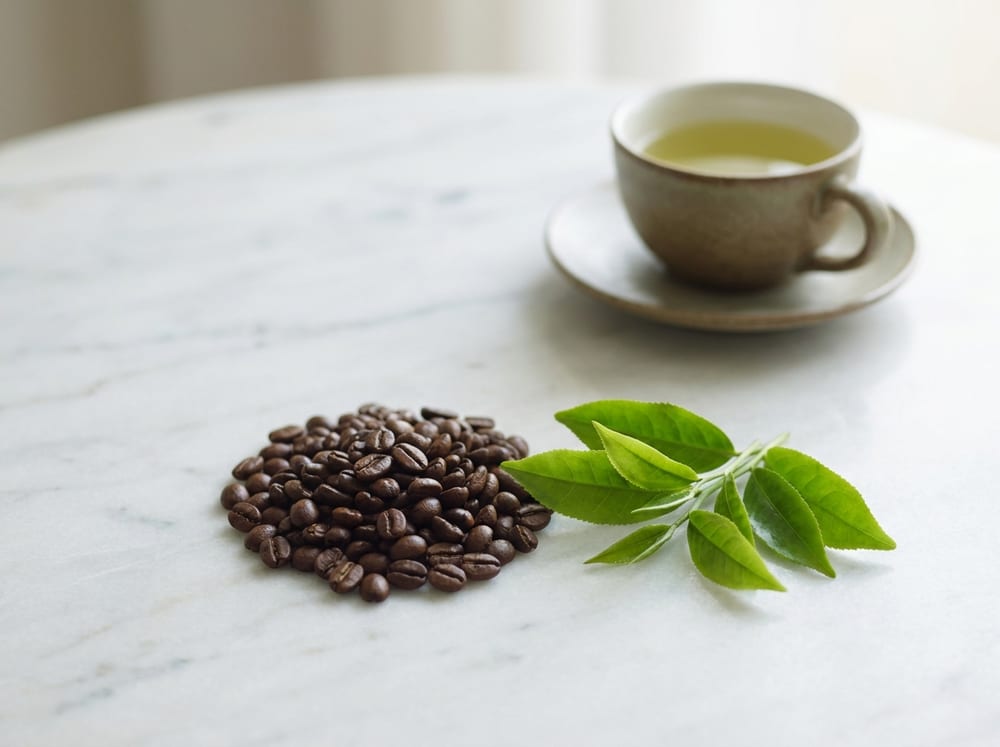
Food sources
Caffeine shows up in coffee, tea, cocoa, and yerba mate. L-theanine occurs naturally in green, black, and white tea (Camellia sinensis), plus a few mushrooms.