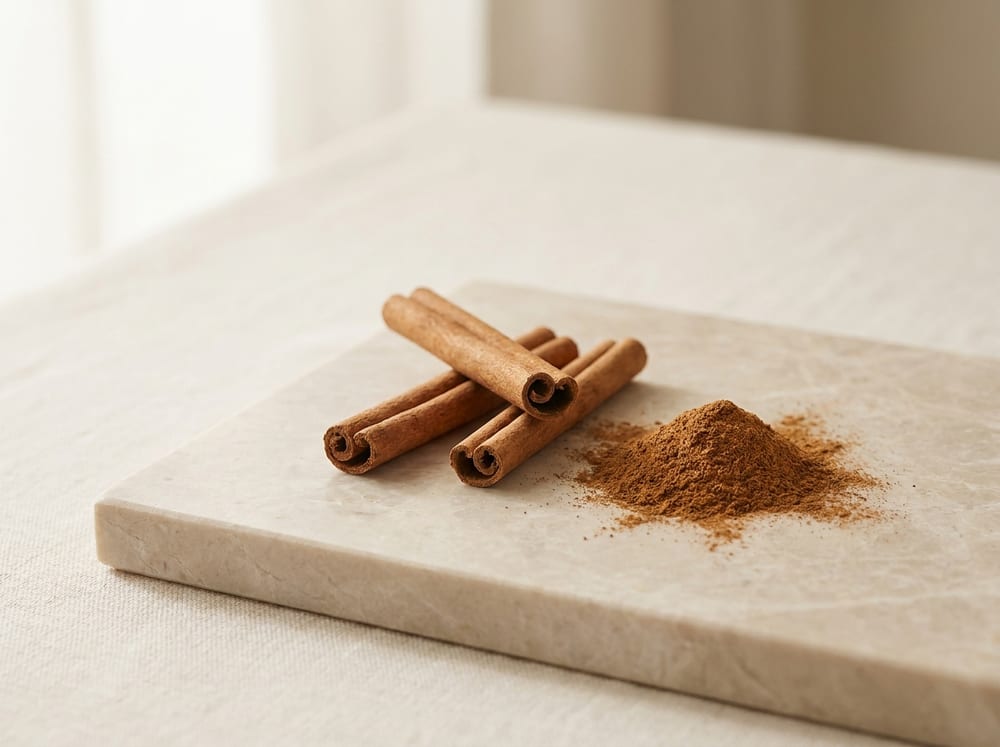
Cinnamon (Cassia / Ceylon)
Cinnamaldehyde and type-A polyphenol polymers are the active players here, and they appear to potentiate insulin signaling by boosting insulin receptor autophosphorylation and GLUT4 translocation. They also block intestinal alpha-glucosidase, slowing down how fast carbs digest. Two separate levers, same direction: less of a glucose spike.
Evidence
Numerous RCTs and several meta-analyses cover both type 2 diabetes and prediabetes, and the results still don't agree. Some meta-analyses show modest fasting-glucose reductions. Others find no significant effect on HbA1c at all. Why the whiplash? Different cinnamon species, different doses, studies that aren't measuring the same thing twice. Not one flawed study. A genuinely inconsistent field, which is exactly why the evidence grade reads mixed.
Interactions
May add to the effect of glucose-lowering drugs (theoretical hypoglycemia). Cassia cinnamon contains coumarin, which at high intake can interact with warfarin and other anticoagulants and add to hepatotoxic drug burden.
Cautions
Cassia cinnamon is high in coumarin, which is hepatotoxic at high chronic doses; Ceylon ("true") cinnamon has far less coumarin and is preferred for supplemental amounts. Overall glycemic benefit is small and unreliable; not a substitute for standard therapy.
Food sources
A common culinary spice (ground bark of Cinnamomum species); obtainable directly from food, though therapeutic doses exceed typical culinary use.