Creatine Monohydrate
Creatine gets phosphorylated into phosphocreatine, and that's your buffer for ATP regeneration in the tissues working hardest, muscle and brain both. Pair it with resistance training and it backs real strength and lean mass gains, which matters more than people think: sarcopenia, the muscle loss that comes with aging, is one of the strongest predictors of frailty and mortality out there. Keeping your muscle is not vanity. It's survival math.
Evidence
Well-replicated RCTs and meta-analyses, not a one-off study, show creatine plus resistance training increases lean mass and strength in older adults. Does that mean it extends your lifespan directly? No, and nobody's claiming it does. The case there is indirect, built on preserved muscle and function. There's also emerging RCT data on modest cognitive benefits, especially under stress, sleep deprivation, or simply getting older. Emerging means watch this space, not bank on it yet.
Interactions
Few clinically significant drug interactions; theoretical additive renal load with nephrotoxic drugs or caffeine's effect on performance is minor. No meaningful anticoagulant interaction.
Cautions
Generally very safe in healthy adults. Use caution and consult a clinician with pre-existing kidney disease. Expect a small amount of water-weight gain. Choose products carrying third-party purity certification (e.g., Creapure/NSF/Informed Sport).
Food sources
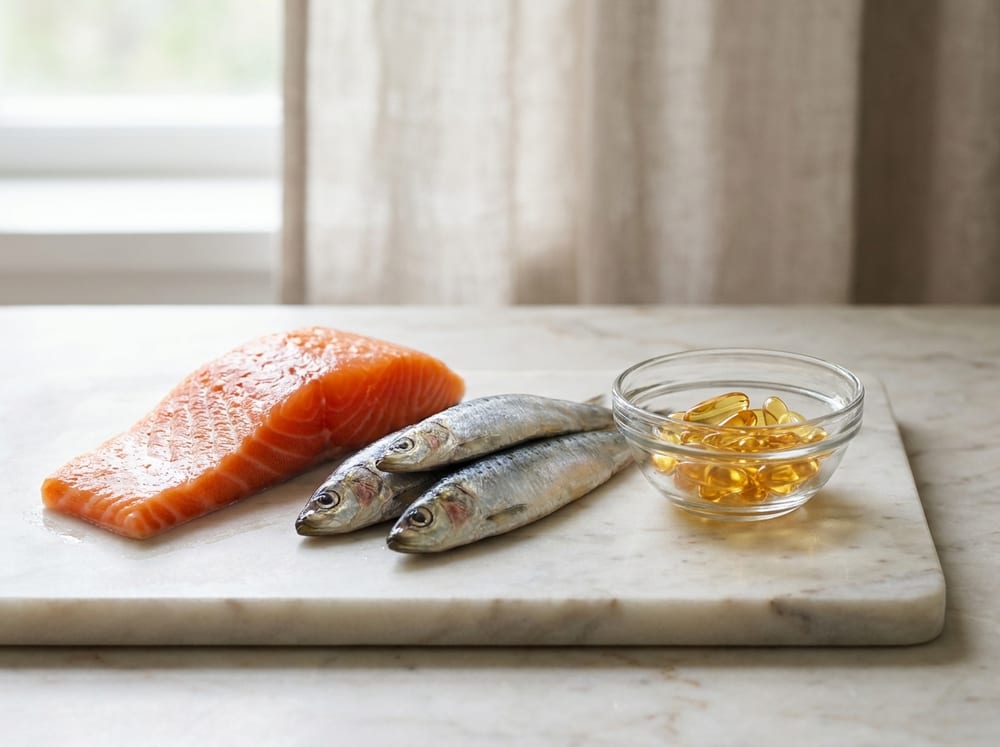
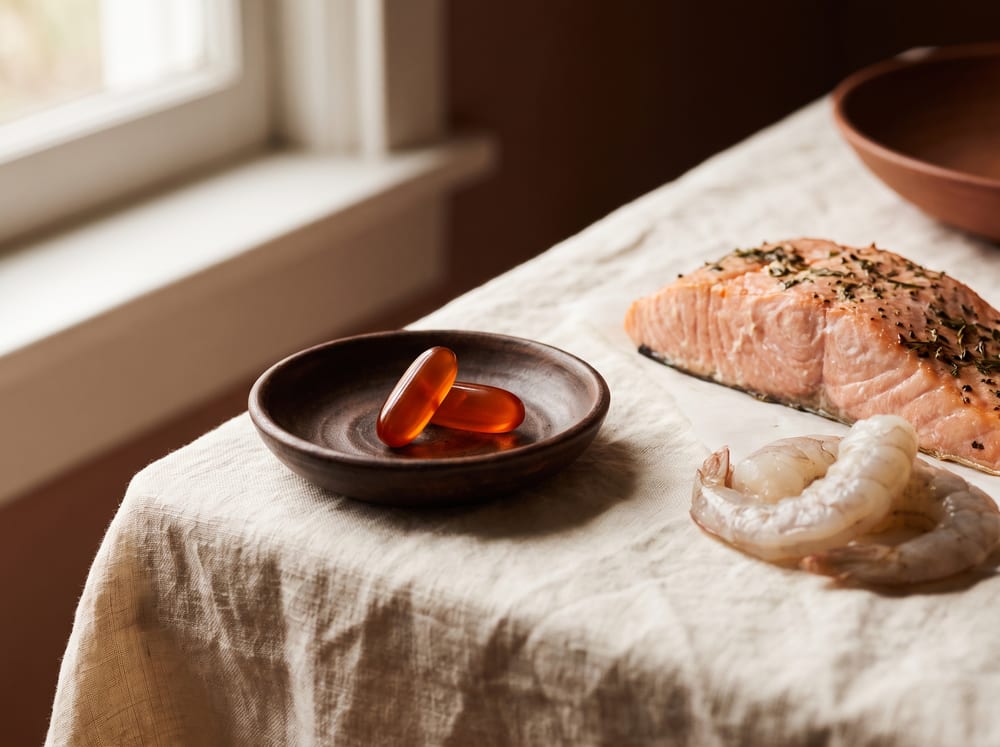
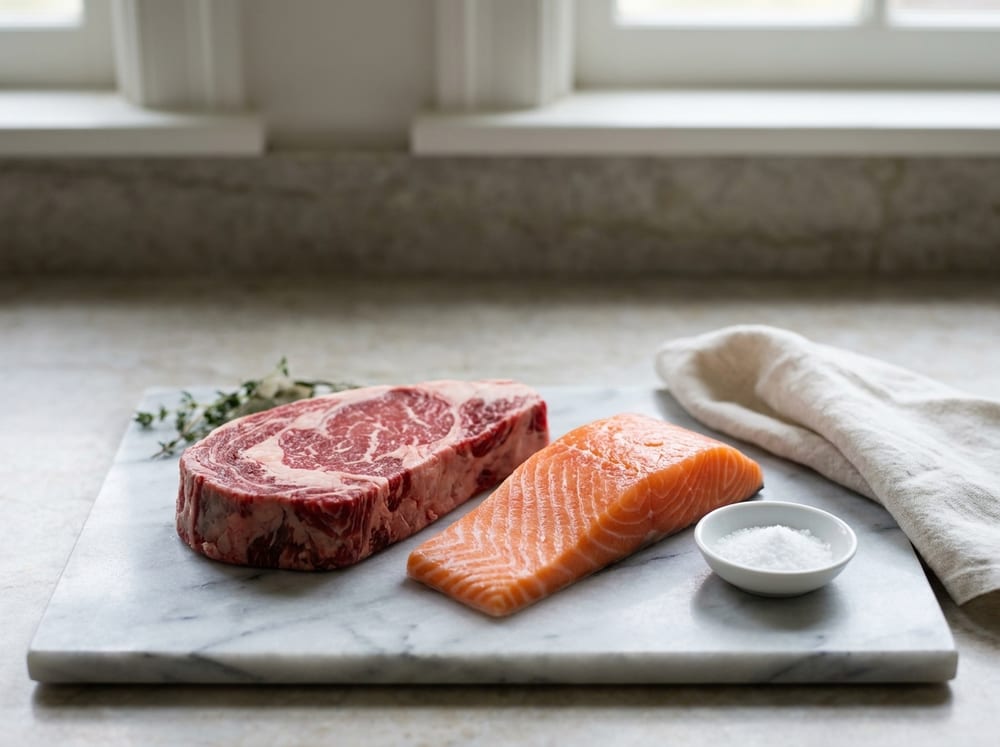
Red meat and fish (herring, salmon, tuna, beef) contain creatine, but at ~1-2 g/kg, dietary amounts are far below supplemental doses; vegetarians have lower baseline stores.