Elderberry (Sambucus nigra)
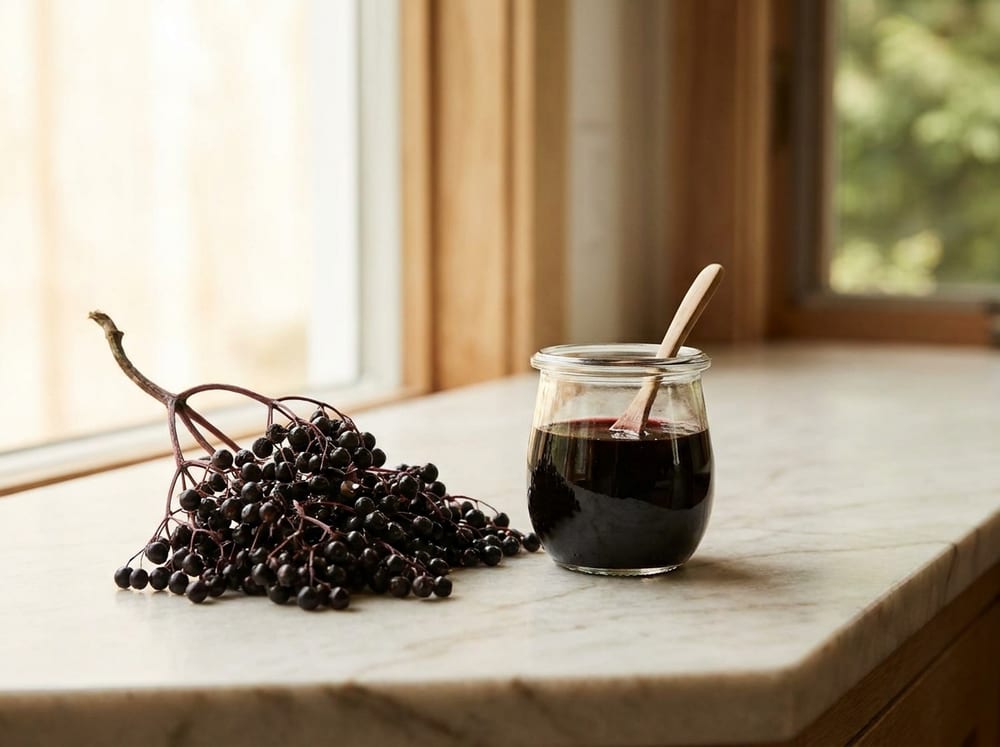
Elderberry is loaded with anthocyanin flavonoids, the same pigments giving it that deep almost-black color, and they pull antioxidant duty while, in laboratory studies, appearing to interfere with viral entry and replication and to modulate cytokine signaling. Translation: less virus getting in, less virus copying itself once it's there. The best-studied use by far is shortening how long and how badly a common upper-respiratory infection hits, and timing is the whole game: it works when started early, not as a rescue once you're already deep into it.
Evidence
Several small randomized trials of standardized elderberry extract report shorter, milder cold and flu symptoms when it's taken right at the first sign of illness, and a meta-analysis points the same direction. Small trials, though, and some of them industry-funded, so hold that loosely. Here's the real split: one airline-travel trial came back positive. A later trial in lab-confirmed influenza found no meaningful benefit at all. Two trials, two different answers. That's just where the research stands right now.
Interactions
Because it can nudge immune activity, use caution with immunosuppressant medications and in autoimmune conditions. It has mild diuretic effects that are theoretically additive with diuretics. Discuss with a clinician if you take these.
Cautions
RAW or unripe elderberries, and the leaves, bark, and seeds, are toxic (they contain cyanogenic compounds) and must never be eaten, only commercially prepared, cooked products are safe. Not for infants, and use caution in pregnancy or autoimmune disease. Reference information only, not a treatment or a substitute for vaccination and medical care.
Food sources
Cooked (never raw) elderberries and commercially prepared elderberry syrups, gummies, and lozenges.