Quercetin
Quercetin is a plant flavonoid doing double duty as an antioxidant and an anti-inflammatory. It also calms down mast cells, which gives it a mild antihistamine-like effect, useful information if you sneeze your way through spring. Here's the interesting part: it behaves like a zinc ionophore, helping escort zinc into your cells. That's one proposed route for its immune and antiviral reputation. At higher doses it also nudges blood pressure through vascular effects. A flavonoid with range.
Evidence
Still emerging, not settled. Small trials suggest quercetin can modestly cut down upper-respiratory infection burden, usually studied alongside vitamin C and zinc, and it eases allergy symptoms for some people. Push the dose higher and you also see small blood-pressure reductions. One catch: plain quercetin barely absorbs, which is why phytosome and bromelain-paired versions exist and get used instead. Think of it as backup, not the headliner.
Interactions
Quercetin can inhibit several drug-metabolizing CYP enzymes and P-glycoprotein, potentially raising levels of some medications; it may reduce absorption of quinolone antibiotics and add to the effect of blood-pressure or blood-thinning drugs. Review with a pharmacist if you take prescriptions.
Cautions
Generally well tolerated at typical oral doses, but long-term high-dose safety data are limited, and very high doses have been associated with kidney effects. Not recommended in pregnancy or breastfeeding due to limited data. Reference information only, not a treatment.
Food sources
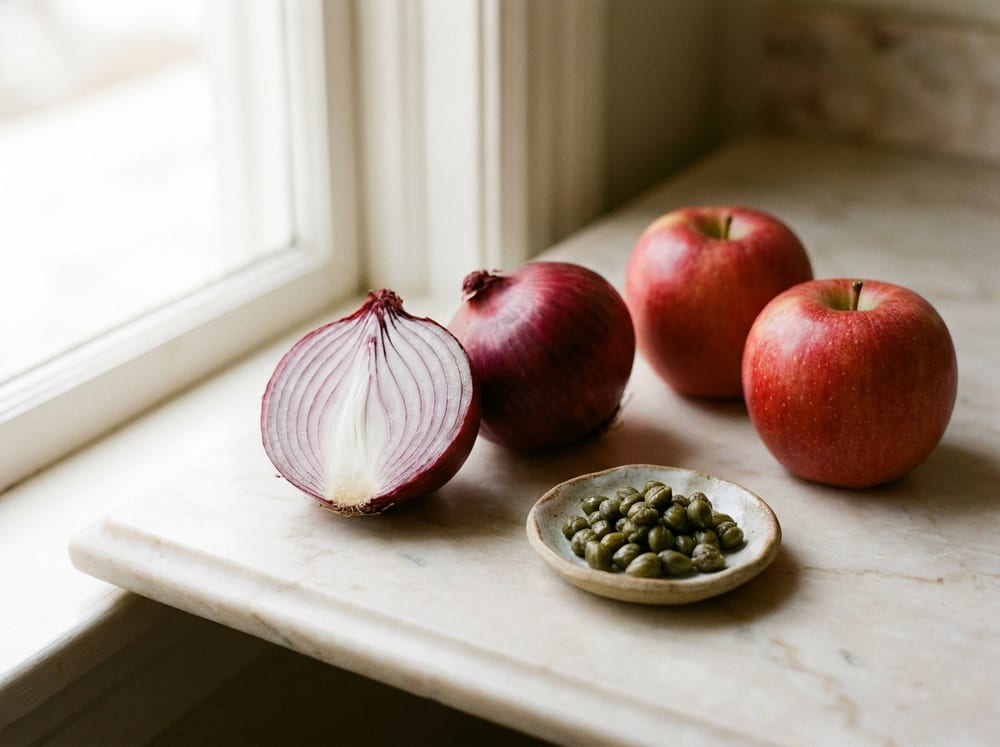
Onions (especially red), capers, apples with skin, berries, kale, broccoli, green tea, and red wine.