Omega-3 Fatty Acids (DHA/EPA)
Your brain cells are basically built out of DHA, girl. It's a structural phospholipid sitting right in neuronal membranes and synapses, keeping membrane fluidity in check, keeping synaptic signals firing, and feeding BDNF-related plasticity. EPA and DHA also team up to make resolvins and protectins: anti-inflammatory compounds that calm neuroinflammation. Adequate status is not optional. Your neurodevelopment and membrane function depend on it.
Evidence
The observational data is loud: higher omega-3 status tracks with slower cognitive decline. But loud isn't the same as proven. The randomized trials, done in cognitively healthy older adults and in Alzheimer's patients, mostly show no clear benefit on cognition. The exception is people who started out with low intake or mild complaints. They saw some benefit. On the cardiovascular side, though, high-dose EPA in high-risk patients has real RCT backing. That part's not up for debate.
Interactions
At high doses (>3 g/day) omega-3s can modestly prolong bleeding time and may add to anticoagulants/antiplatelets (warfarin, DOACs, aspirin, clopidogrel) - clinically significant bleeding is uncommon but relevant around surgery. High-dose EPA has been associated with a small increased atrial fibrillation signal.
Cautions
Choose products tested for oxidation and heavy-metal/PCB contamination. Fish-allergic individuals should use caution; algae-derived DHA is a vegetarian alternative. Not a treatment for established dementia.
Food sources
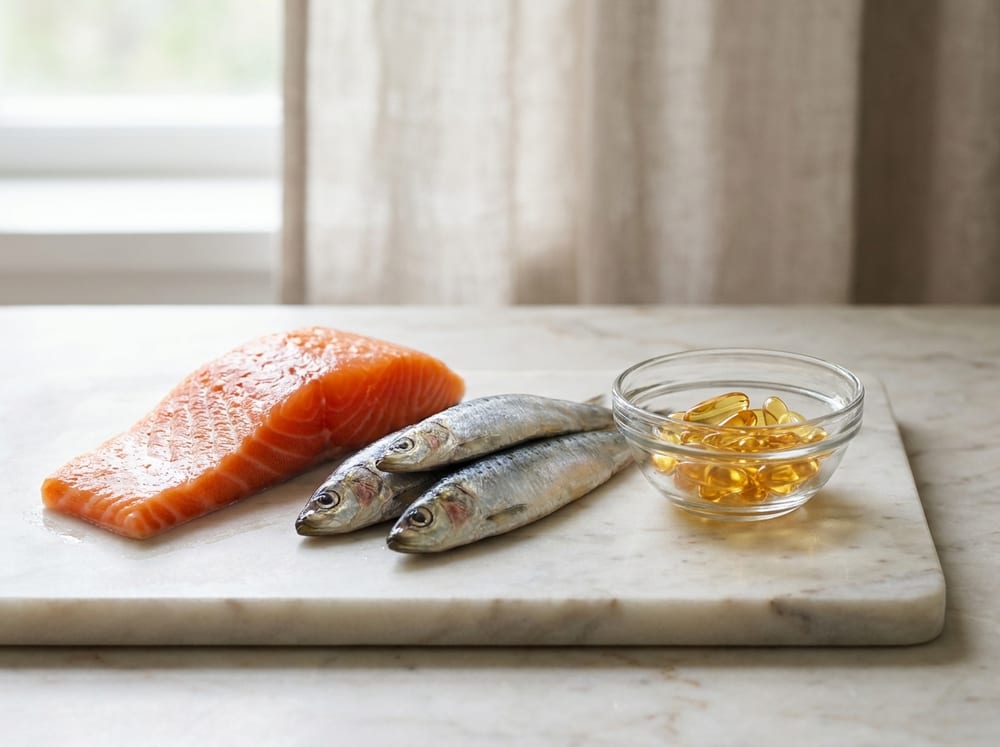
Fatty fish (salmon, sardines, mackerel, herring, anchovies), fish roe, and algae; plant ALA (flax, chia, walnuts) converts to EPA/DHA only inefficiently.