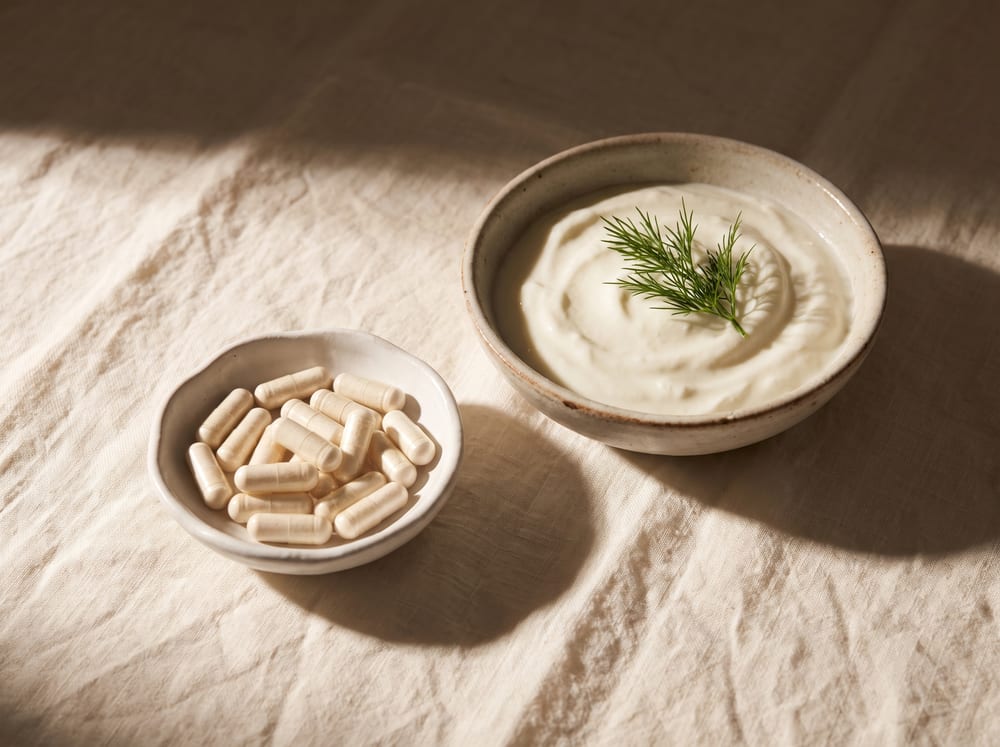
Multi-Strain Probiotic
You're taking in live bacterial strains here, usually from the Lactobacillus and Bifidobacterium genera, and they move into your gut lumen on a short-term lease. While they're there, they compete with less useful microbes for space and nutrients, produce short-chain fatty acids that feed your colonic lining, and talk to your gut-associated immune tissue. The catch: the effects are strain-specific, and most strains clear out the moment you stop supplementing, because they were never built to stick around.
Evidence
Mixed, and the split is sharp. Strong evidence for a couple of narrow jobs: preventing antibiotic-associated diarrhea, and specific strains for acute infectious diarrhea. Weak and inconsistent everywhere else: general gut health, bloating, IBS, take your pick. The results ride entirely on the exact strain and dose studied, so a probiotic that crushed it in one trial tells you nothing about the random blend on the shelf next to it.
Interactions
May be taken a few hours apart from oral antibiotics to preserve viability during a course. Generally few drug interactions, but antifungal and antibiotic timing can reduce live counts.
Cautions
People who are immunocompromised, critically ill, have central venous catheters, or have short-bowel or damaged gut barriers should not start probiotics without clinician guidance, as rare invasive infections have been reported. Transient gas or bloating is common in the first days. Discuss with a clinician before use.
Food sources
Live-culture yogurt, kefir, sauerkraut, kimchi, miso, and tempeh supply related fermenting organisms, though usually different strains and lower, less defined counts than supplements.