Enteric-Coated Peppermint Oil
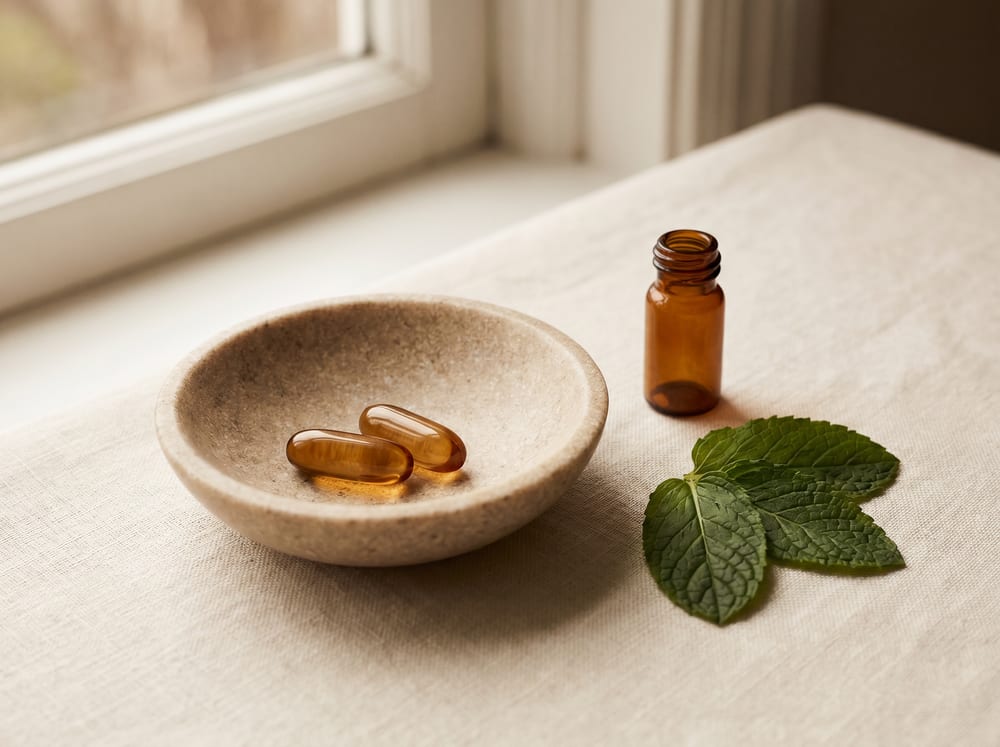
Menthol is peppermint oil's active constituent, and it works your gut like it's got something to prove: it blocks calcium channels in intestinal smooth muscle, so spasm relaxes and the cramping and pain back off. The enteric coating holds the oil back until it hits your lower gut instead of releasing early and relaxing the wrong sphincter, the one that turns your relief into reflux.
Evidence
Moderate evidence, and moderate here still means something. Multiple randomized trials and meta-analyses back enteric-coated peppermint oil for easing overall IBS symptoms and abdominal pain, not just making you feel like something's happening. The catch: the trials themselves are small, short, and a mixed bag on quality. Real result, modest receipts.
Interactions
May raise levels of drugs metabolized by CYP3A4 and can add to the effect of acid-reducing medication, which can dissolve the enteric coating prematurely; separate from antacids and acid suppressants.
Cautions
Can worsen heartburn and reflux; avoid in significant GERD or hiatal hernia. Not advised in known bile-duct obstruction, gallbladder inflammation, or severe liver disease, and caution in pregnancy. Discuss with a clinician before use.
Food sources
Culinary peppermint leaf and peppermint tea contain the aromatic oils in far smaller, non-standardized amounts and lack the targeted enteric delivery.