Iron (Ferrous Bisglycinate)
Iron sits at the literal center of hemoglobin and myoglobin, and it's the cofactor your body leans on for oxygen transport and energy metabolism. Heavy or prolonged periods are one of the biggest reasons menstruating people run low on it, full stop. Replace that iron and you restore hemoglobin, and with it the oxygen delivery behind your energy, your concentration, your ability to get through a workout without feeling wrecked. Bisglycinate is the chelated form, picked specifically because it treats your gut better.
Evidence
Strong, and specifically strong for correcting iron-deficiency anemia, not a blanket strong for 'take iron because it sounds good.' Oral iron reliably raises hemoglobin and ferritin and resolves deficiency symptoms in well-designed trials. Ferrous bisglycinate holds its own against standard iron salts, with generally fewer GI complaints along the way. But that strong grade is earned by documented deficiency specifically. Take iron without confirmed low iron and you're not getting a benefit. You're taking a risk.
Interactions
Iron reduces absorption of levothyroxine, tetracycline and fluoroquinolone antibiotics, bisphosphonates, and levodopa; separate dosing by 2-4 hours. Antacids, proton-pump inhibitors, calcium, and tannins in tea/coffee lower iron absorption. Take these apart from iron.
Cautions
Only supplement iron with a confirmed need (low ferritin/anemia), since excess iron is pro-oxidant and can accumulate. Do not use if you have hemochromatosis or another iron-overload condition. Iron overdose is a leading cause of poisoning in young children, so store securely. Common side effects are constipation, nausea, and dark stools. Educational information for discussion with a clinician, not a prescription.
Food sources
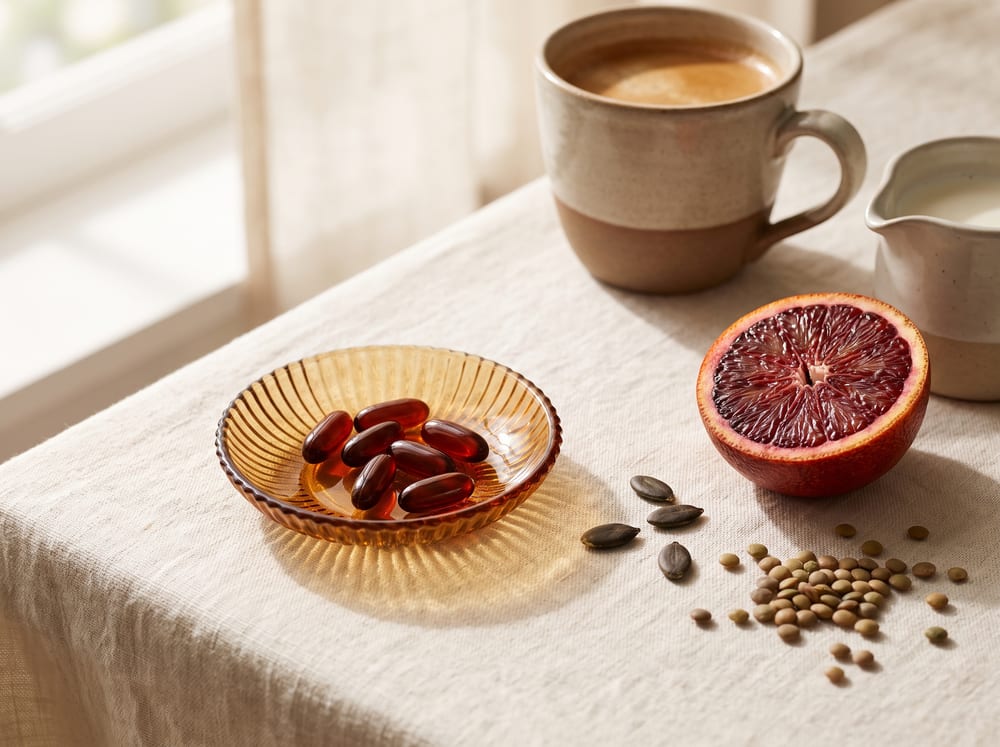
Red meat, liver, oysters and shellfish, lentils, beans, tofu, pumpkin seeds, and iron-fortified cereals; plant (non-heme) sources absorb better with vitamin C.