Vitamin B6 (Pyridoxine / P5P)
Vitamin B6, once it's active as pyridoxal-5-phosphate, works as a cofactor for building the neurotransmitters serotonin, dopamine, and GABA. It also plays a role in steroid-hormone metabolism. The theory for PMS: more cofactor on hand means smoother neurotransmitter and hormone synthesis, and that's the proposed reason it can take the edge off premenstrual mood swings and irritability.
Evidence
Moderate. A real body of randomized trials, plus a well-known systematic review, show vitamin B6 up to about 100 mg/day beats placebo for overall premenstrual symptoms and for premenstrual depressive symptoms specifically. That's a genuine win. But a lot of the trials feeding that conclusion were small or shaky on quality, so don't expect a dramatic fix. This takes the edge off. It doesn't erase the problem.
Interactions
B6 can reduce the effectiveness of levodopa (when given without carbidopa) and may interact with phenytoin and other antiepileptics, lowering their levels. Certain drugs (isoniazid, hydralazine, penicillamine, some oral contraceptives) can deplete B6 status. Coordinate with a clinician if taking these.
Cautions
The main risk is dose-related: chronic intake above 100 mg/day (and especially several hundred mg/day) can cause sensory peripheral neuropathy, usually reversible on stopping. Keep total intake from all supplements in view. Educational information for discussion with a clinician, not a prescription.
Food sources
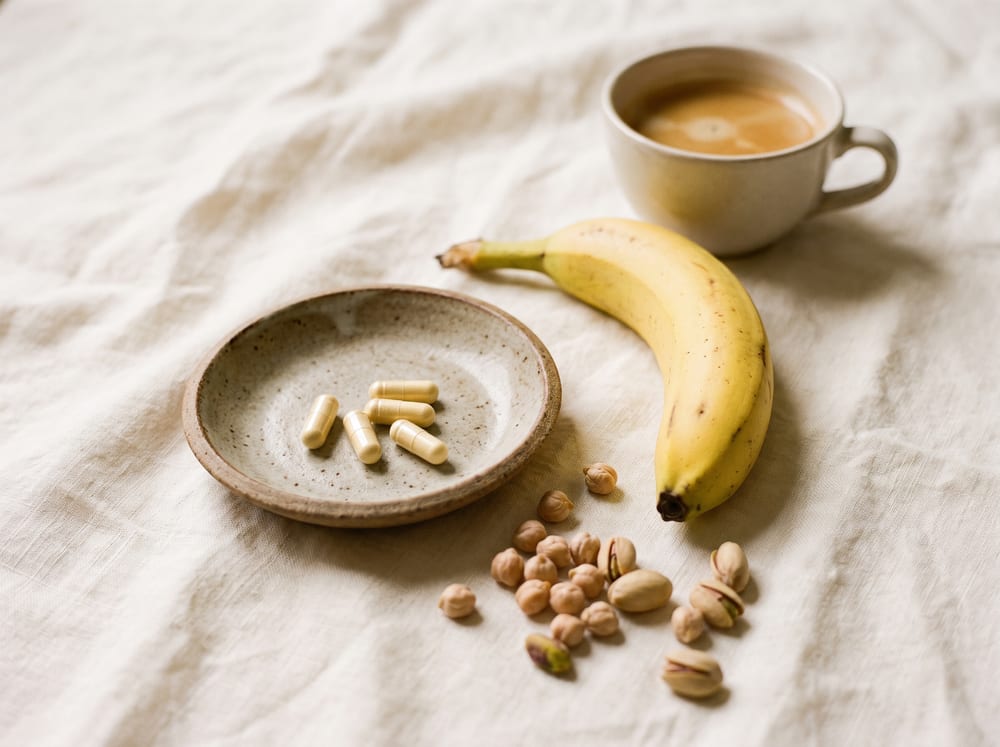
Chickpeas, tuna and salmon, poultry, beef, potatoes, bananas, pistachios, and fortified cereals.