L-Citrulline
Citrulline is a non-protein amino acid, and your kidneys turn it into L-arginine, the raw material nitric-oxide synthase needs to make NO. Here's the smart part: because citrulline skips first-pass liver metabolism, taking it orally raises your plasma arginine and NO more efficiently than just taking arginine straight. And NO is the whole game. It relaxes vascular smooth muscle in the corpus cavernosum, the exact pathway PDE5 inhibitors work downstream of, which means better penile blood flow and better endothelial vasodilation.
Evidence
We're talking small human RCTs and pilot studies here, so keep that in mind. One placebo-controlled trial in men with mild erectile dysfunction found improved erection hardness scores at 1.5 g a day. Pilot crossover work pairing citrulline with resveratrol showed IIEF gains on top of PDE5 inhibitors. And the pharmacokinetics check out: 3 g reliably raises plasma arginine 40-50% within 1-2 hours, so the mechanism isn't in question. What's still small is the proof at scale. The effect looks real. It's modest, and it hasn't been replicated in a big trial yet.
Interactions
Additive blood-pressure lowering with antihypertensives and, importantly, with nitrates and PDE5 inhibitors (sildenafil, tadalafil) via the shared NO pathway, which can cause hypotension. Theoretical additive effect with other vasodilators.
Cautions
Generally well tolerated; high doses may cause mild GI upset. Use caution in kidney or liver disease and in anyone on nitrates or blood-pressure medication. Not a treatment for the underlying cardiovascular causes of ED. Reference information only; no cure claims.
Food sources
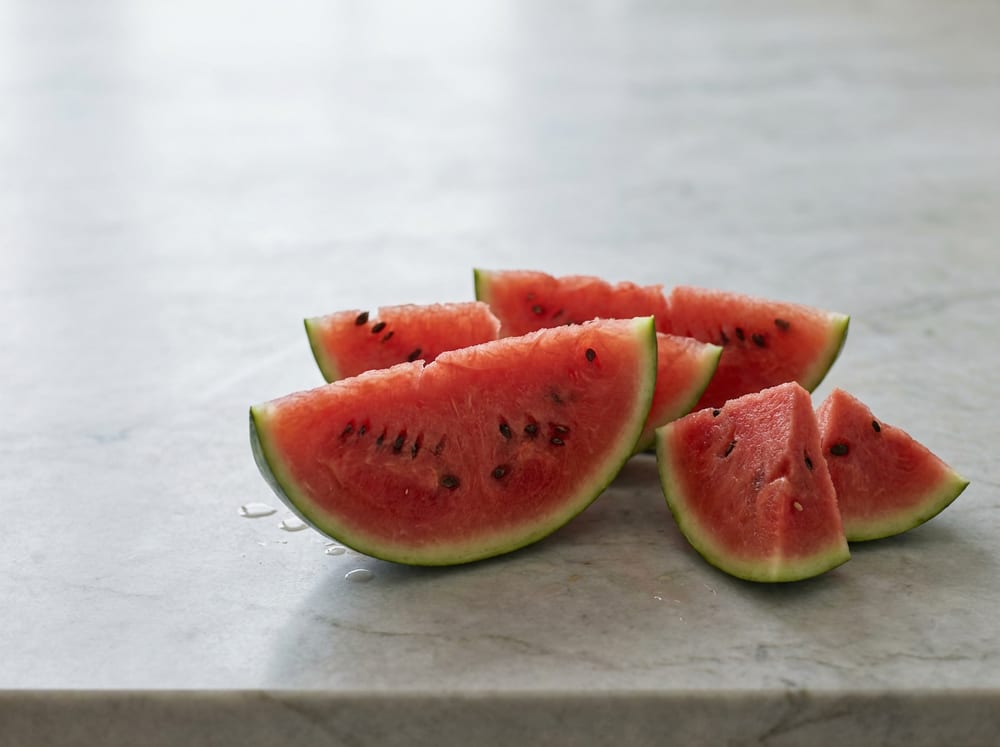
Watermelon (especially the rind) is the richest dietary source; also cucumbers, pumpkin, gourds, and other cucurbits. Dietary amounts are far below studied supplement doses.