Valerian Root
Valerian root brings valerenic acid and a cast of other constituents to the table, and together they're thought to modulate GABA-A receptor signaling while also touching adenosine and serotonin systems. The payoff is a mild anxiolytic and sedative effect that can ease you into sleep, without carrying a benzodiazepine's profile.
Evidence
Mixed, and here's the split that explains it. Ask how people slept and subjective reports look better, per some randomized trials and meta-analyses. Hook them up to sleep measurements, though, and the effect mostly disappears. Study quality doesn't help the case either: small, weak, inconsistent in extract and dose across the board. What you feel and what gets measured don't agree here, so mixed is the grade it earns.
Interactions
Additive sedation with alcohol, benzodiazepines, barbiturates, opioids, antihistamines, and other CNS depressants. May potentiate anesthesia (discontinue before surgery). Possible additive effects with serotonergic drugs and, theoretically, with some antihypertensives. Evidence on CYP enzyme interactions is mixed; use caution with medications having a narrow therapeutic index.
Cautions
Common effects include morning grogginess, headache, dizziness, and occasional GI upset; rare reports of paradoxical stimulation. Long-term safety is not well established, and abrupt discontinuation after prolonged use has been associated with withdrawal-like symptoms in isolated reports. Rare hepatotoxicity has been reported with some botanical combination products. Avoid in pregnancy and breastfeeding and do not combine with alcohol or sedatives. Not a substitute for medical evaluation of insomnia.
Food sources
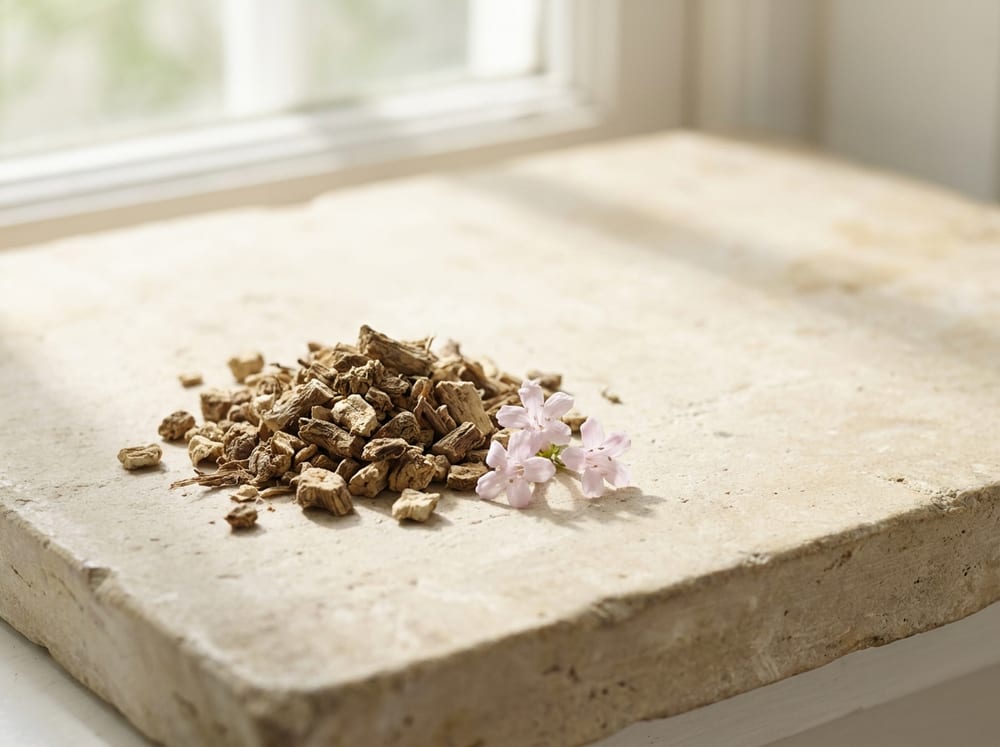
Not a dietary food component; consumed as the dried root, tea, tincture, or standardized extract.