Gentle Pelvic Tilt and Cat-Cow Rocking
A slow, small-range rock of your pelvis and spine on hands and knees, rounding and arching in rhythm with your breath, kept deliberately easy so your low back and pelvis get to move without asking anything extra of you on a day your uterus is already asking plenty.
Why it works
Small repeated pelvic tilts move your lumbar spine and sacroiliac region through a comfortable arc, rhythmically lengthening and releasing the low-back and hip-flexor tissue that tightens up and guards the second your uterus starts cramping. Slow, rocking movement like this is thought to quiet that protective muscle tension and give your brain something else to pay attention to besides the pain, and pairing each phase with your breath encourages the longer, calmer exhales that raise vagal tone. Be clear about what's happening here: the relief runs through muscular and neural comfort, not any direct effect on the uterus itself, and there's no strong evidence this changes the physiology of the cramp. Small studies on gentle mobility and yoga for period pain are encouraging, but they're limited and inconsistent, not a verdict. Keeping the range small and genuinely pain-free is exactly what makes this the right call on a crampy day instead of the wrong one.
How to do it
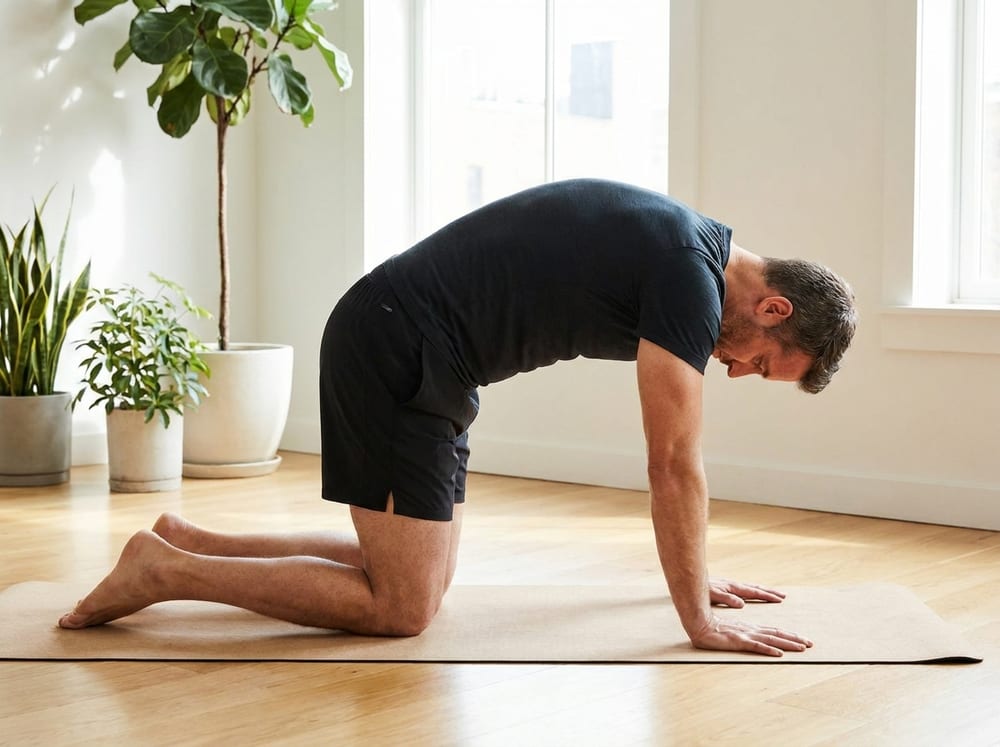
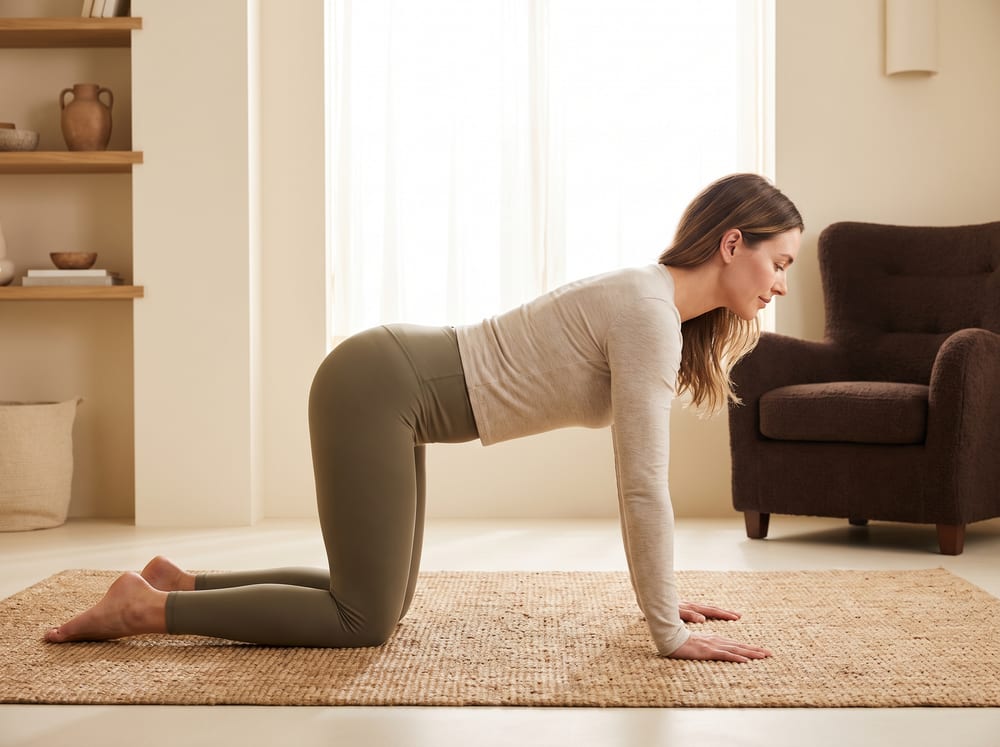
- Come onto hands and knees with wrists under shoulders and knees under hips, spine in a comfortable neutral position.
- As you exhale, gently tuck the tailbone and draw the belly up to round the low back a small, comfortable amount.
- As you inhale, slowly release and let the pelvis tip the other way so the low back softly arches, keeping the movement small and the neck long.
- Flow between the two shapes slowly, letting the pelvis lead and the spine follow one segment at a time, breathing with the movement.
- Keep the range well within comfort and stop short of any pinch or sharp sensation, staying focused on the low back and pelvis rather than forcing the upper back.
- Slow the rocking gradually and return to a neutral, still position for a few easy breaths before coming out.
Dose: 1 to 2 rounds of 8 to 12 slow rocks, once or twice a day as needed through your period. Small range. That's not a suggestion today.
⚠ This is educational content for discussion with a clinician, not medical advice or a prescription. Pad the knees and keep the movement small and comfortable; skip any range that pinches the low back or wrists, and rest the forearms on a raised surface if the wrists complain. Ease off with acute low-back or wrist injury. Seek medical care for period pain that is severe, worsening, new, or comes with fever, unusually heavy bleeding, faintness, or pain outside your normal pattern.