Reclined Supported Hip-Opener Windshield Wipers
A supine, do-almost-nothing hip drill: knees bent, feet wide, swaying side to side like windshield wipers, with an option to pause knees-open over a cushion and just let your hips and inner thighs release during your period.
Why it works
Lying flat on your back takes every bit of load off your spine and pelvis, so your hips get to move with almost no muscular effort at all. Swaying your knees rotates the hip joints through an easy arc, in and out, and gently mobilizes the sacroiliac region, while pausing with the knees dropped open lets your inner-thigh adductors and outer hips release, exactly the areas that tighten up and guard the moment cramps flare. Be straight about what this is: comfort, not treatment. The value here is less hip and low-back tension and a calming, rhythmic movement from a fully rested position, not any direct action on your uterus. The supported, flat-on-your-back setup also frees your ribcage and diaphragm to breathe slowly, nudging your nervous system toward parasympathetic. Evidence that gentle movement eases menstrual discomfort is real but limited and low-certainty, so file this under safe, soothing self-care, not a fix, and lean on the fully supported version on the days that need it.
How to do it
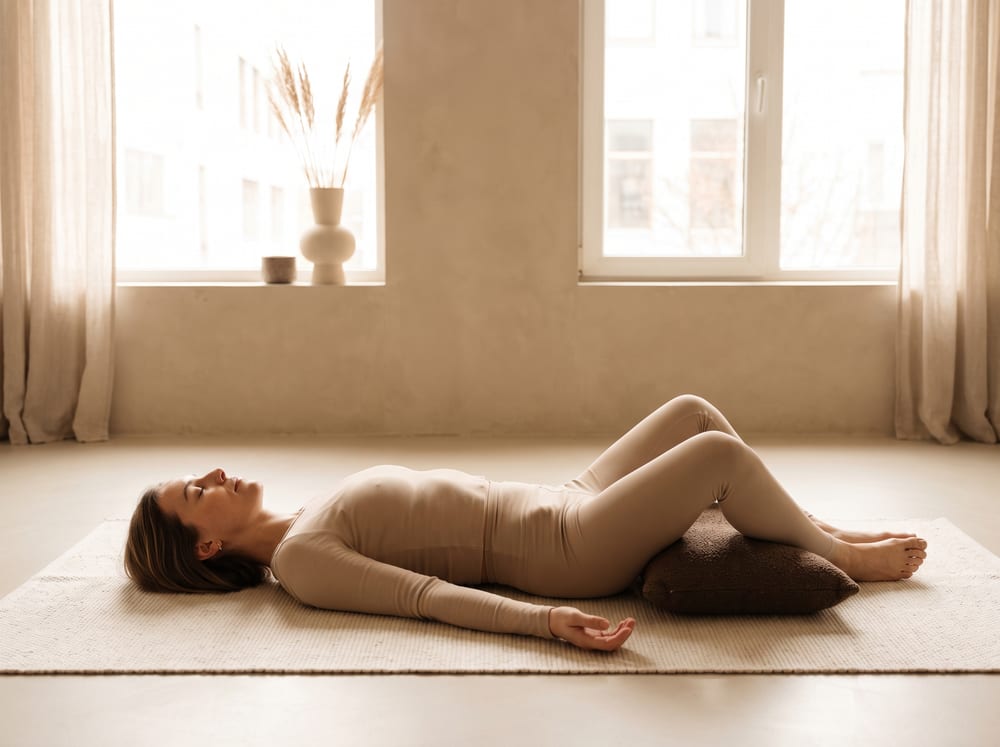
- Lie on your back with your knees bent and feet on the floor a little wider than your hips, arms resting open at your sides.
- Keeping the movement slow and effortless, let both knees sway gently to one side, only as far as stays completely comfortable, then float them back through center to the other side.
- Continue the slow side-to-side wipers in rhythm with your breath, keeping the shoulders and belly relaxed and the low back at ease.
- To open the hips instead, bring the soles of the feet together and let the knees drop wide, resting each knee against a cushion so the inner thighs release without effort.
- Breathe slowly and low into the belly and let the hips grow heavier with each exhale, staying two to five minutes in whichever variation feels best.
- To finish, bring the knees back together with your hands, hug them softly toward the chest for a breath or two, then roll to one side and rest before sitting up.
Dose: 8 to 12 slow wipers each side, or a 2 to 5 minute supported knees-open hold, as needed during your period. Whichever one feels better today wins.
⚠ This is educational content for discussion with a clinician, not medical advice or a prescription. Always rest the knees on cushions when dropping them open to avoid overstretching the inner thighs or groin, and take the sway only as far as is fully comfortable, especially with any hip or pubic-symphysis pain. Come out slowly using your hands. If you are past the first trimester of pregnancy, favor a side-lying rest over long periods flat on the back. Seek medical care for period pain that is severe, worsening, new, or accompanied by fever, heavy bleeding, faintness, or pain outside your normal pattern.