Prenatal Cat-Cow on All Fours
A gentle, hands-and-knees spinal flow that eases the low-back tension of a center of gravity that's been quietly moving on you, letting your belly hang away from your spine instead of pulling on it. A lot of pregnant people find real relief here.
Why it works
As pregnancy moves along, your growing uterus shifts your center of gravity forward and your lumbar curve tends to deepen, which loads your low back and the muscles running along your spine. Moving slowly between a rounded spine, cat, and a gently extended, neutral spine, cow, on all fours takes your lumbar spine through a comfortable, unloaded range and rhythmically works the surrounding muscles through contraction and release, which can ease stiffness and give short-term relief from pregnancy-related low-back and pelvic-girdle discomfort. Be clear about the evidence: it's real but modest. Exercise programs that include cat-cow-style mobility are linked to less low-back pain in pregnancy, though cat-cow itself is rarely studied on its own. The all-fours position also earns its place because it lets your abdomen hang down and away from your spine, so you avoid the deep abdominal compression of a crunch and stay off your back entirely. Plenty of people find it genuinely comforting in late pregnancy. What it will not do is turn your baby. Claims about influencing position are not well supported, so don't count on it for that.
How to do it
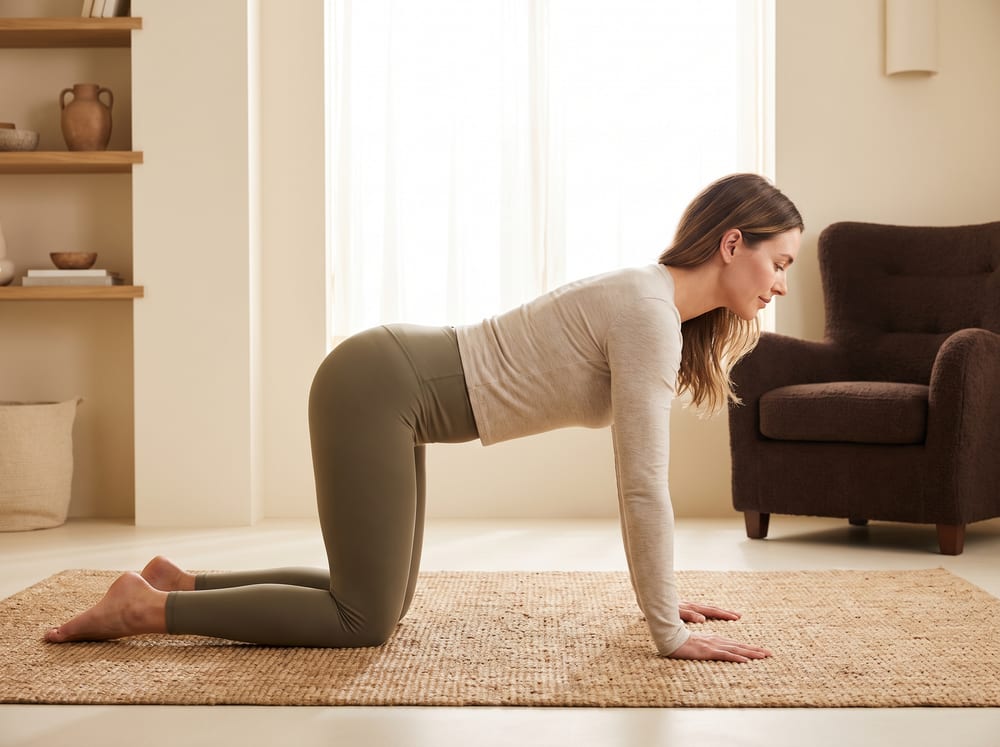
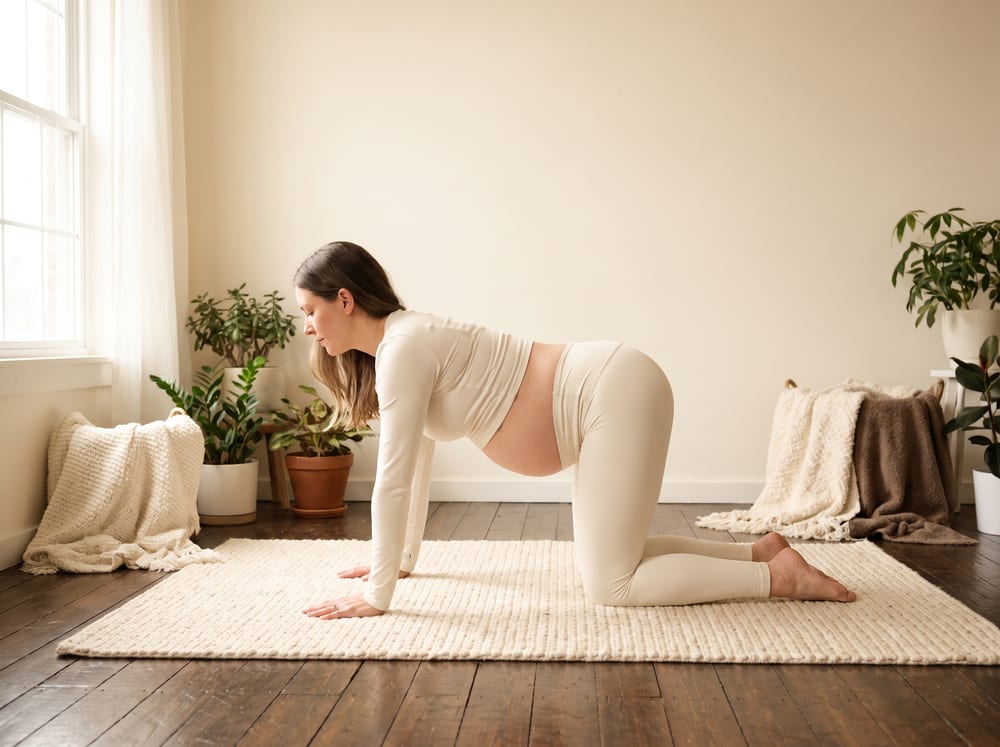
- Come onto all fours on a padded mat with your wrists stacked under your shoulders and your knees under your hips, spine long and neutral, gaze down so your neck stays in line with your spine.
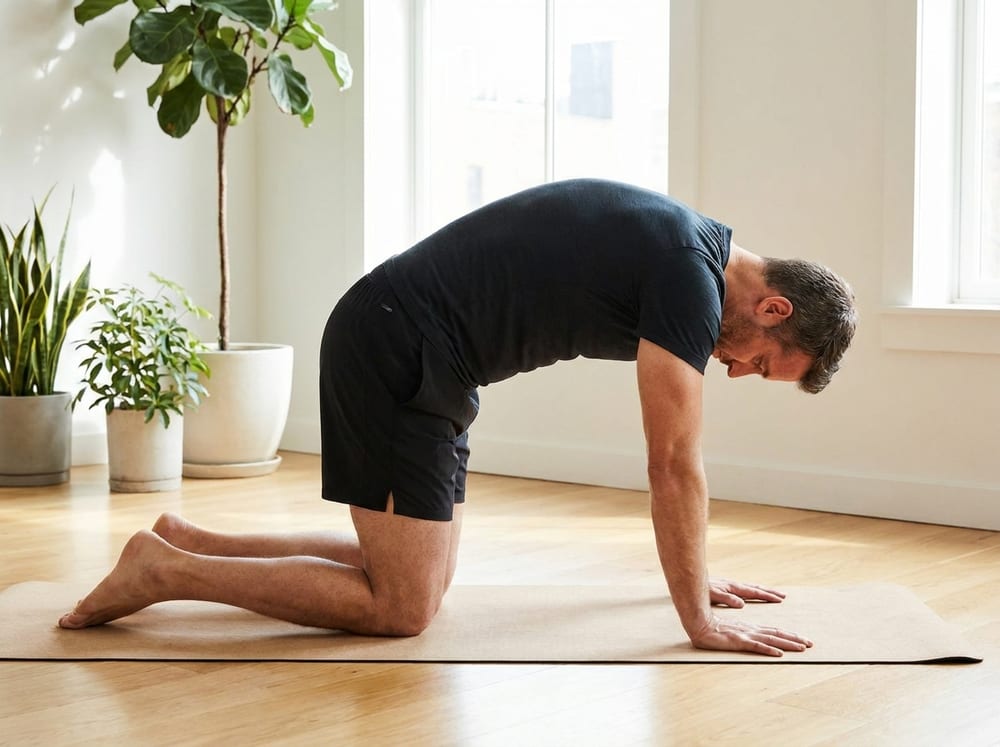
- Exhale and gently round your spine toward the ceiling into the cat shape, letting your head and tailbone drop softly and drawing the belly up only lightly, without any forced abdominal squeeze.
- Inhale and slowly return through neutral, letting the spine lengthen into a gentle, comfortable cow shape. Stop at a flat, relaxed back rather than sagging deeply into the low back, which can feel pinchy in pregnancy.
- Continue moving slowly between the two shapes, matching the pace to your breath and keeping the range within what feels easy and relieving.
- Finish in a neutral spine, then lower to sit back gently toward your heels or rise carefully to standing, avoiding any twisting of the trunk.
Dose: 1-2 sets of 8-10 slow cat-cow cycles, most days. Slow and small beats deep, every time right now.
⚠ Educational content for discussion with your clinician, not medical advice. Get provider clearance before starting, particularly with wrist pain (carpal tunnel is common in pregnancy), pelvic-girdle pain, or any complication. Keep the movement small and comfortable and never force spinal extension; avoid deep abdominal compression and any twisting. Do not hold your breath. Trimester modifications: first trimester, the standard all-fours version is generally comfortable. Second and third trimesters, reduce the range so you move only between a rounded and a flat, neutral spine rather than dropping deeply into the low back, cushion the knees, and shorten the session if wrists complain; an elevated version with hands on a sturdy chair seat or countertop while standing and hinging at the hips is a good substitute if kneeling is uncomfortable. Stop and consult your provider for any vaginal bleeding, fluid leakage, dizziness, or contractions.