Facial Dermaplaning Tool
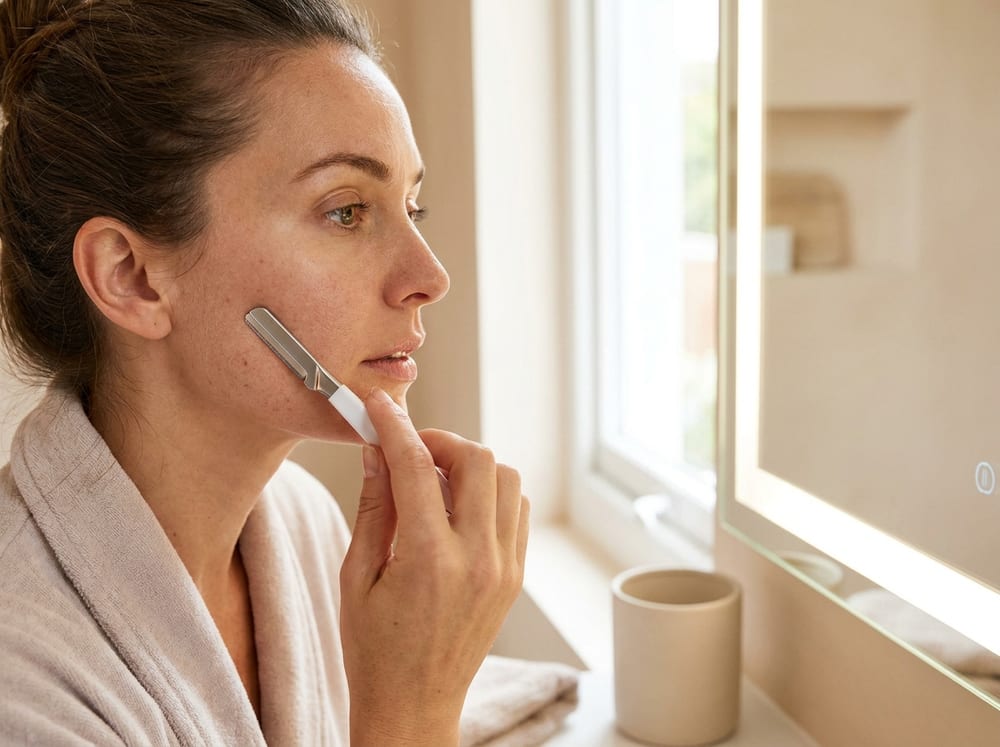
A dermaplaning tool holds a single fine blade at a low angle, and with short strokes over taut skin, it shaves away the fine vellus 'peach fuzz' while lifting off the loose layer of dead surface cells at the same time. That's physical exfoliation, two jobs done in one pass. Skin ends up smoother, a touch brighter, and foundation glides on instead of catching. Now, about that myth: vellus hair is cut at the surface, not damaged at the root, so it grows back with the exact same fine, soft texture within days. It does not come back thicker. It does not come back coarser or darker. That old wives' tale can retire.
Why it works
Evidence here is emerging. Small clinical and cosmetic-practice reports describe smoother texture and better makeup application after dermaplaning, and the physics back up the debunking: hair cut at the surface cannot grow back thicker. That's not how hair works. What's missing is rigorous, long-term trials in home users. So here's the grade: short-lived and modest, not transformative. Enjoy the glow while it lasts, and don't expect a face lift.
How to use it
- Start with clean, completely dry skin. Any moisture or product makes the blade drag.
- Hold the skin taut with your free hand, blade at a shallow angle, about 45 degrees.
- Glide in short, light downward strokes in the direction the fuzz grows. Never press hard, never go over the same spot twice.
- Steer clear of active breakouts, raised bumps, or any broken skin.
- Rinse away the debris, then apply a hydrating serum or moisturizer to the fresh surface.
- Morning after: broad-spectrum SPF, no skipping it. Fresh blade, every session.
Use on clean, fully dry skin in the evening. Pull the skin taut with your free hand and glide the blade at a shallow angle (roughly 45 degrees) in short, light downward strokes, following the direction the fuzz lies. Skip any active, raised, or broken breakouts, and finish with a hydrating layer and, the next morning, sunscreen.
⚠ Always work on skin held taut with a light hand and a shallow blade angle to avoid nicks. Use a clean, sharp blade every single time; a dull or reused blade drags, tears, and can carry bacteria. Avoid dermaplaning over active acne, pustules, or cystic breakouts, as it can spread bacteria and worsen them, and skip it entirely if you have very sensitive, reactive, or rosacea-prone skin, which is easily inflamed by physical exfoliation. Because you are removing the surface layer, freshly dermaplaned skin is more vulnerable to sun and irritants, so always follow with hydration and diligent daytime SPF, and hold off on strong actives (retinoids, acids) the same evening. This is educational information, not medical advice.