Ingrown Hair & Razor Bump Treatment
Here's what's happening under that bump: a hair curled back or grew sideways instead of clearing the follicle like it should have, and the bump is your skin's inflammatory reaction to a hair trapped where it doesn't belong. A leave-on chemical exfoliant goes after the real problem, the layer of dead cells and debris that traps hairs in the first place. Salicylic acid is an oil-soluble beta-hydroxy acid, so it gets down into the follicle and dissolves the keratin plug capping it shut. Glycolic acid is a water-soluble alpha-hydroxy acid that works the surface, breaking the bonds between dead cells so they shed instead of piling up. Clear the follicle mouth and a trapped hair can finally reach the surface. That's what calms the raised, inflamed bumps of razor irritation, fades the clogged dark dots of strawberry legs, and smooths the sandpaper texture of keratosis pilaris, which is really just keratin building up around the follicle.
Why it works
Moderate, and here's exactly why. Salicylic and glycolic acid are established keratolytics. Dermatology guidance leans on them hard for clearing follicular plugging, with a consistent nod for both pseudofolliculitis barbae and keratosis pilaris. That part's real. What's not real: overnight results. This builds over weeks, and it rests more on clinical consensus and small studies than on large trials. It manages the buildup. It does not cure keratosis pilaris, and the bumps come right back the moment you stop. No acid changes that.
How to use it
- Cleanse the bump-prone area and dry it fully. Pick a night you have not just shaved.
- New product? Patch test a small spot first and wait a day to see how skin reacts.
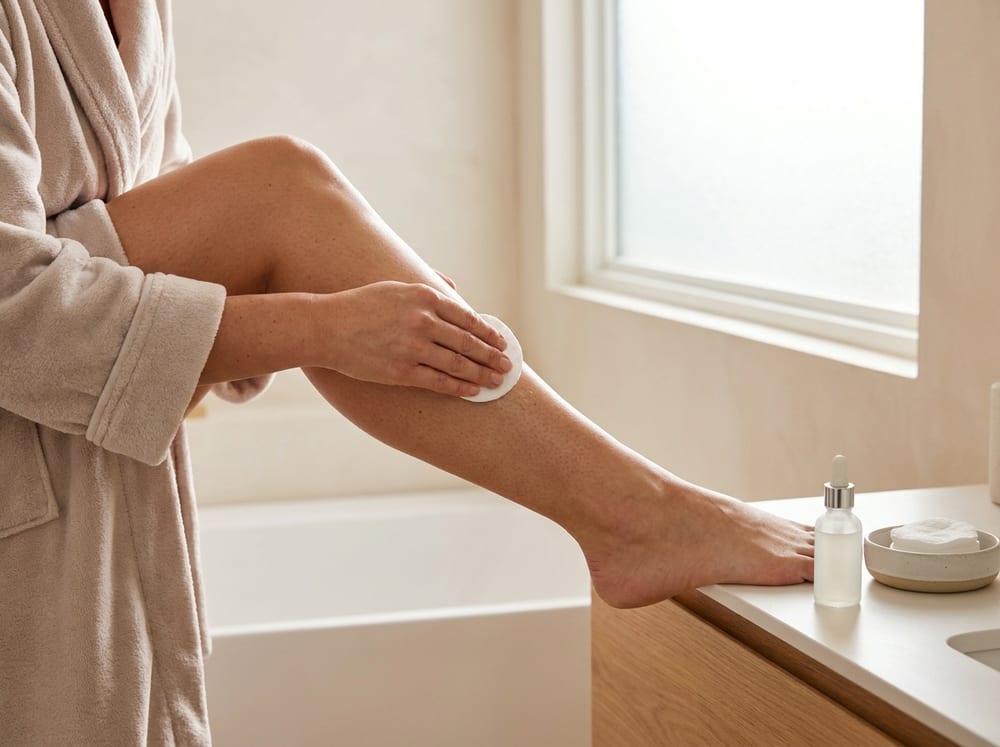
- Smooth a thin, even layer of the salicylic or glycolic exfoliant over the area. Skip any broken or raw skin entirely.
- Let it absorb before you get dressed. And keep your hands off any bump, no picking, no squeezing, no digging.
- Start at two or three nights a week. Only add more once your skin proves it can handle it.
- Wear sunscreen on treated skin during the day. Acids raise sun sensitivity, no exceptions.
In the evening, on clean, dry skin, a few nights a week rather than daily to start. Sweep or pat a thin layer over the bump-prone area, legs, bikini line, underarms, or the backs of the arms, and let it absorb before dressing. Do not apply it right after shaving on freshly abraded or broken skin, since acid on a raw surface stings and irritates rather than calms, and never pick, squeeze, or dig at a bump to free the hair, which drives infection and scarring. Build up frequency only as your skin tolerates it.
⚠ Chemical exfoliants increase sun sensitivity, so pair regular use with daytime sunscreen on any exposed skin, which matters for legs and arms in warm weather. Go slow on sensitive areas like the bikini line and underarms, and space acid nights away from shaving so you are never applying it to raw or broken skin. Patch test any new product on a small area first, and if it stings sharply, burns, or leaves skin red and tight, that is a signal to use it less often or switch, not to push through. This is general education, not medical advice; deeply embedded ingrowns, spreading redness, pus, or bumps that do not clear can signal infection or folliculitis and warrant a clinician.