Maca Root (Lepidium meyenii)
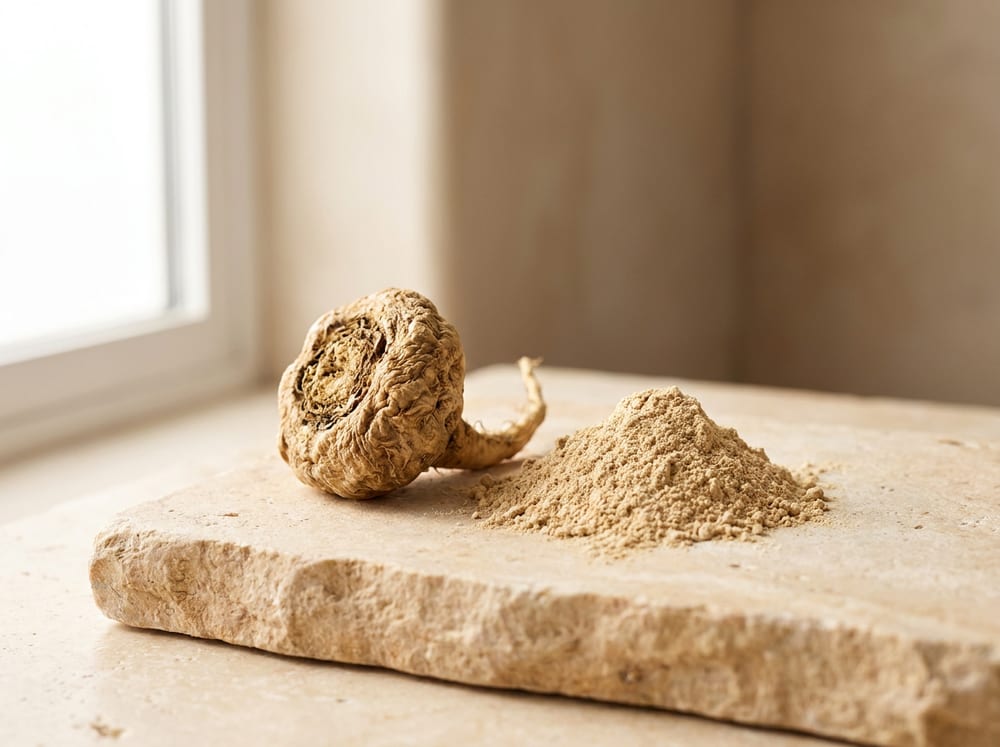
Maca is a Peruvian cruciferous root, and its bioactive macamides and macaenes seem to work on libido through central, non-hormonal pathways, which is the interesting part: it boosts sexual desire without measurably touching your testosterone or estrogen. Nobody's pinned down the exact mechanism yet. What's clear is what it isn't: not a hormone effect, not a nitric-oxide effect. Maca's doing something else entirely, and science hasn't fully caught up to it yet.
Evidence
A systematic review pulling together several small RCTs found limited but suggestive evidence that maca improves sexual desire after 6 or more weeks, in both healthy men and menopausal women. One placebo-controlled trial found it helped with SSRI and antidepressant-induced sexual dysfunction in women specifically. Here's the catch: the trials are small, short, and not measuring the same things the same way. The direction is consistent. The confidence is not there yet.
Interactions
No well-established drug interactions. Because it is a cruciferous plant, theoretical caution with thyroid conditions (goitrogens) at high intake, especially raw. Being studied specifically for SSRI-induced sexual dysfunction, it is often used alongside SSRIs, but data are preliminary.
Cautions
Generally well tolerated; occasional GI upset. Caution with thyroid disease and in hormone-sensitive conditions pending more data, and cooked/gelatinized forms are traditionally preferred over raw. Long-term safety data are limited. Reference information only; no cure claims.
Food sources
Traditionally eaten as a cooked or dried food staple in the Peruvian Andes; available as root powder, flour, or capsule. Culinary amounts are generally lower than studied supplement doses.