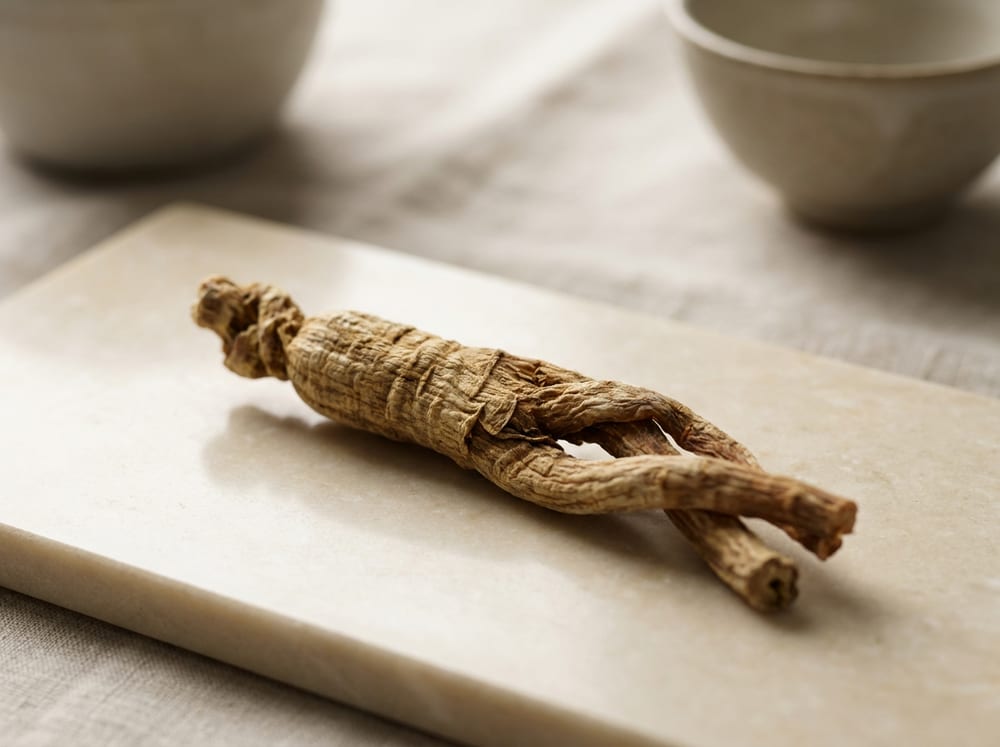
Panax Ginseng (Korean Red Ginseng)
Ginsenosides go straight for nitric oxide, pushing your endothelial and neuronal cells to release more of it, and that's what drives vasodilation in penile tissue. That's the blood flow talking. There's also a possible assist on the hypothalamic-pituitary axis. Net effect: better cavernosal blood flow, plus some adaptogenic and antioxidant support for the vascular endothelium while it's at it. Girl, that root is multitasking.
Evidence
Multiple placebo-controlled trials, plus an early systematic review, showed real improvement on IIEF erectile-function scores. Then the Cochrane review came through and knocked it down a peg: low-quality evidence, trivial-to-modest effect. The signal is real. The methodology just isn't strong enough to call it settled. And that's specifically for erectile function. Libido is a different question, and the data doesn't answer it clearly.
Interactions
May reduce the anticoagulant effect of warfarin (monitor INR); use caution with antiplatelet/anticoagulant drugs. Can potentiate blood-pressure and blood-glucose-lowering medications, may interact with MAOIs, and its stimulant quality can compound insomnia. Numerous CYP-mediated drug interactions are possible.
Cautions
Can cause insomnia, headache, or mild GI upset. Caution in poorly controlled hypertension, diabetes on medication, hormone-sensitive conditions, and before surgery (bleeding risk). Product quality and ginsenoside content vary widely between brands. Reference information only; no cure claims.
Food sources
Not a food; consumed as root, extract, tea, or standardized supplement. Note that American ginseng (Panax quinquefolius) and Siberian 'ginseng' (Eleutherococcus) are different plants with different evidence.