Silica (Orthosilicic Acid) with Biotin
Bioavailable silicon, the choline-stabilized orthosilicic acid form specifically, looks like it stimulates type I collagen synthesis in your dermal fibroblasts and raises dermal hydroxyproline. That's the science behind the promise of firmer skin and stronger hair and nails. Biotin is riding along too: it's vitamin B7, a coenzyme for the carboxylase enzymes running fatty-acid and keratin metabolism, which is the whole reason it ends up in beauty formulas in the first place.
Evidence
Mixed, and the two ingredients don't deserve equal credit. Silicon has a few small randomized, placebo-controlled trials behind it, around 10 mg/day of ch-OSA for 20 weeks, showing modest gains in skin elasticity and less nail and hair brittleness. Biotin is the weaker half of this bottle. It reliably helps only genuine deficiency, and deficiency is rare. For people who are already well-nourished, there's little quality evidence it does anything for skin, hair, or nails at all. One ingredient is pulling the weight here.
Interactions
The biotin component is the key concern: high-dose biotin can distort common lab tests, causing falsely high or low results on thyroid, cardiac troponin, and hormone panels, which can lead to misdiagnosis. Tell any clinician or lab that you take it, and stop several days before blood work.
Cautions
Silicon at these doses is well tolerated. The honest caveat is that most of the marketing weight sits on biotin, whose benefit for healthy people is not supported and whose main real-world risk is skewed lab results rather than the supplement itself doing harm. Manage expectations accordingly.
Food sources
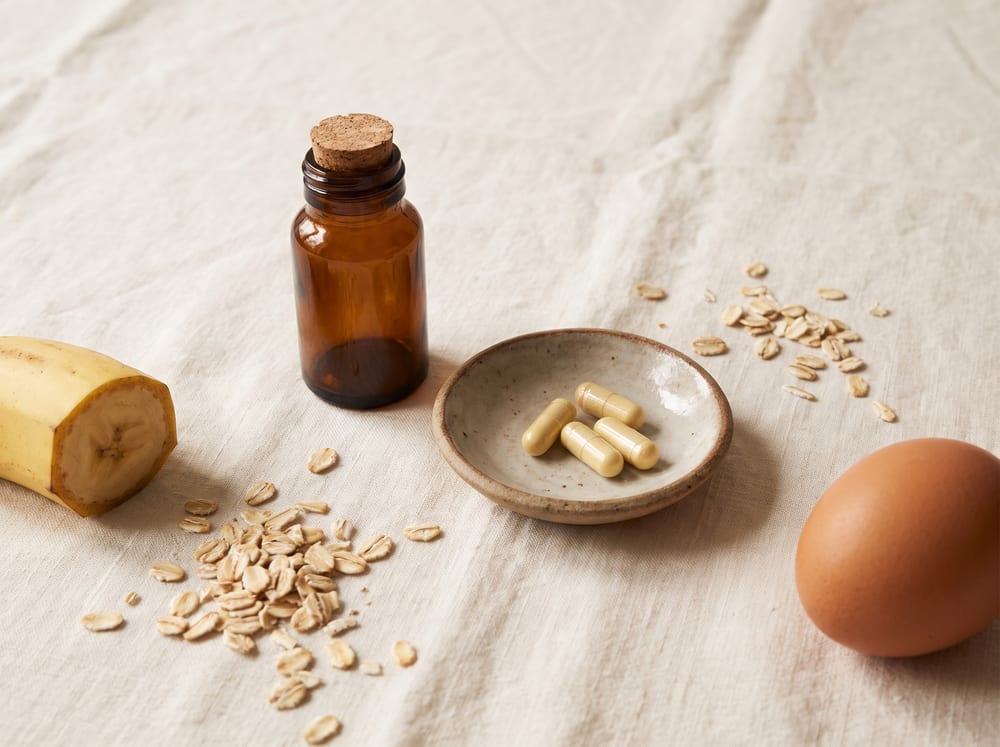
Silicon: whole grains, oats, barley, bananas, and mineral water. Biotin: eggs, liver, nuts, seeds, and legumes; a normal varied diet supplies more than enough biotin, which is why deficiency is uncommon.